
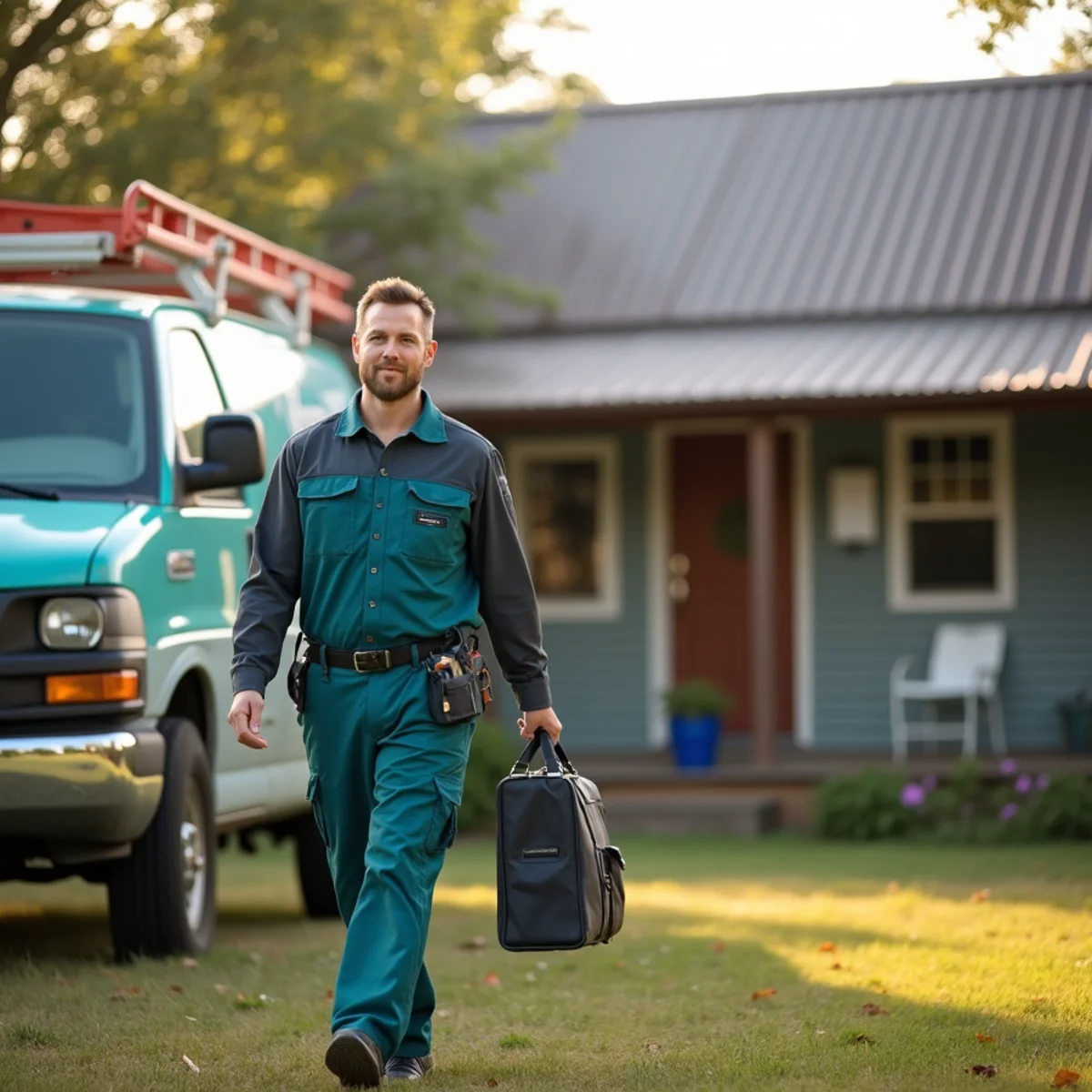
Farm homes have HVAC realities that a subdivision house does not. The equipment sits in open exposure with no windbreak, outbuildings and shop spaces sometimes share or strain the home's system, and the households that run them cannot afford to lose heat or cooling at a bad moment in the working year. When a Frazer condenser takes storm damage, the question is rarely just comfort, it is whether the system can be brought back economically or whether it is time to plan a replacement. We give owners the honest math either way.
The rest of our Frazer work is the seasonal heartbeat of rural HVAC: AC repair through the humid summers, furnace and heat-pump service when the cold arrives, refrigerant-leak diagnosis on aging systems, and the maintenance that heads off a breakdown before it happens. Because Frazer is off the gas grid, many homes run propane furnaces or dual-fuel heat pumps, and we service all of it. We come stocked for the twenty-minute drive so a farm household is not left waiting on a second trip.
HVAC Somerset KY is licensed, insured, and EPA 608 certified, and on any storm-related work we document the damage with photos and itemized estimates so your insurance claim is backed by a clear record. Call +1 (327) 210-5999 and we will head east.
Homes & HVAC Challenges in Frazer
Frazer is an east-Pulaski farming community of farmhouses and rural homes set among open fields, and that openness is central to how its HVAC systems live and die. With no tree line or ridge to break the wind, outdoor condensers here take the full force of every storm that crosses the county, and the May 2025 storm track ran close enough to leave a trail of flattened coil fins, bent line sets, and displaced ductwork that we are still repairing. A farmhouse condenser in an open field is simply more exposed than the same unit tucked beside a house in town.
Heating in Frazer runs off the gas grid, so propane furnaces and dual-fuel heat pumps are the norm, and many farm households keep a wood stove or a shop heater in the mix for the coldest weeks. Farmhouses tend to be older and larger, with additions and remodels that grew the conditioned space over the decades without anyone ever recalculating the load, so we frequently find systems that are undersized for the house they now serve or ductwork that never kept pace with an addition. When we replace a system here, we run a proper Manual J so the new equipment actually matches the house as it stands.
The farm setting brings other quirks we plan for. Crawlspaces under older farmhouses collect moisture that corrodes coils and sweats ducts, dust and chaff from field and barn work load up filters and coils faster than in a town home, and the sheer distance between the equipment and the far rooms of a rambling farmhouse strains ductwork that was marginal to begin with. All of it means a Frazer system needs attention a little more often than a compact house in Somerset, and it is exactly the kind of rural HVAC reality we build our maintenance around.
A Recent Frazer Service Call
A farm household off KY-80 near Frazer called about an AC that still ran but clearly was not the unit it used to be. The May storm had rolled through months earlier, and while the house came through fine, the condenser out in the open beside the barn lot had taken a beating that only got worse as the season wore on.
Our technician found the coil fins flattened across a wide section, choking airflow through the condenser, and a hairline crack in a service valve that was slowly bleeding refrigerant. The combination had the system limping: reduced heat rejection from the damaged coil and a dropping charge from the leak, both pushing the compressor to work harder than it should on a hot Kentucky afternoon.
We combed the coil fins straight to restore airflow, replaced the cracked service valve, repaired the refrigerant loss, evacuated the system, and recharged it to spec. The condenser recovered enough performance to finish out several more seasons, which was exactly what the family wanted, some good years bought before a planned replacement rather than an emergency purchase forced on them mid-summer. We documented the storm damage with photos and an itemized estimate so they had it on file for their insurer.
Serving near KY-80 east, Frazer community, east Pulaski farmland, May 2025 storm track and throughout Frazer.
Most-Requested Here
HVAC Services in Frazer
Need an HVAC Contractor in Frazer?
Talk to a real local technician — not a call center. Honest, upfront pricing and financing on new systems. We answer 24/7 for heating and cooling emergencies.
- Free estimates on new systems
- Same-day service in Pulaski County
- Licensed, bonded & insured
- 4.9★ from 168+ reviews
Nearby
Other Areas We Serve
Why Homeowners Trust Us
Why Choose HVAC Somerset KY for Frazer Homes & Businesses
Frazer homeowners call us because we show up fast, know the systems common in this area, and stand behind our work with honest, upfront pricing.
4.9★ from 168+ reviews
Neighbors across Pulaski County rate us 4.9 stars for fast, honest work — the kind of local reputation you can only earn one job at a time.
15+ years serving Pulaski County
We have spent 15 years working on Somerset-area systems, from in-town furnaces to off-grid propane and dual-fuel setups out in the county.
Licensed, insured & EPA-certified
We are a licensed, bonded, and insured Kentucky HVAC contractor, and our technicians hold EPA Section 608 certification for safe refrigerant work.
Same-day & 24/7 emergency service
Same-day service across Pulaski County — 24/7 emergency dispatch, nights, weekends & holidays.
Upfront pricing, no surprises
You get a written diagnosis and line-item pricing before we touch a wrench — plus honest repair-versus-replace advice instead of a sales pitch.
Local Questions
Frazer HVAC FAQs
Often yes. Around Frazer the May 2025 storm left condensers with flattened coil fins, bent line sets, and cracked service valves, all of which choke performance without stopping the unit outright. We comb the fins straight, replace damaged parts, repair leaks, and recharge to spec, frequently buying several more good seasons before a replacement is needed.
Generally yes. Frazer farmhouses sit in open exposure with no windbreak, dust and chaff from field and barn work load coils and filters faster, and older crawlspaces collect moisture that corrodes equipment. All of that means a farm system needs attention a bit more often than a compact town home, which is why we build maintenance plans around these realities.
Farmhouses around Frazer often grew over the decades without anyone recalculating the load, so the original system is undersized for the space it now serves, or the ductwork never kept pace with the addition. When we plan a replacement we run a proper Manual J calculation so the new equipment and ducts match the house as it actually stands today.
Yes. On storm-related work we photograph the damage and provide an itemized, insurance-ready estimate showing what the storm broke and what the repair or replacement costs. Even when we can save the unit, we document everything so you have a clear record on file for your insurer. Call +1 (327) 210-5999.
About twenty minutes east of Somerset out KY-80 into the farmland. Because it is a real drive, we load common parts before heading out so most repairs get finished on the first trip rather than stranding a farm household waiting on a return visit.
It varies with what failed and your equipment, so we quote after we diagnose rather than guessing on the phone. As a rough Kentucky guide, a diagnostic often runs $70 to $180 and a capacitor $110 to $360, while a full replacement generally lands between $5,800 and $13,800. On a storm-damaged Frazer condenser we always give you the honest repair-versus-replace math in writing first. Verify current figures at +1 (327) 210-5999.
More often than a town home. Dust and chaff from field and barn work load a filter fast around Frazer, so we usually suggest checking it monthly through heavy work seasons and changing it well before it clogs. A choked filter starves the coil, drives up your bill, and shortens the life of equipment that already sits in hard, open field exposure.