
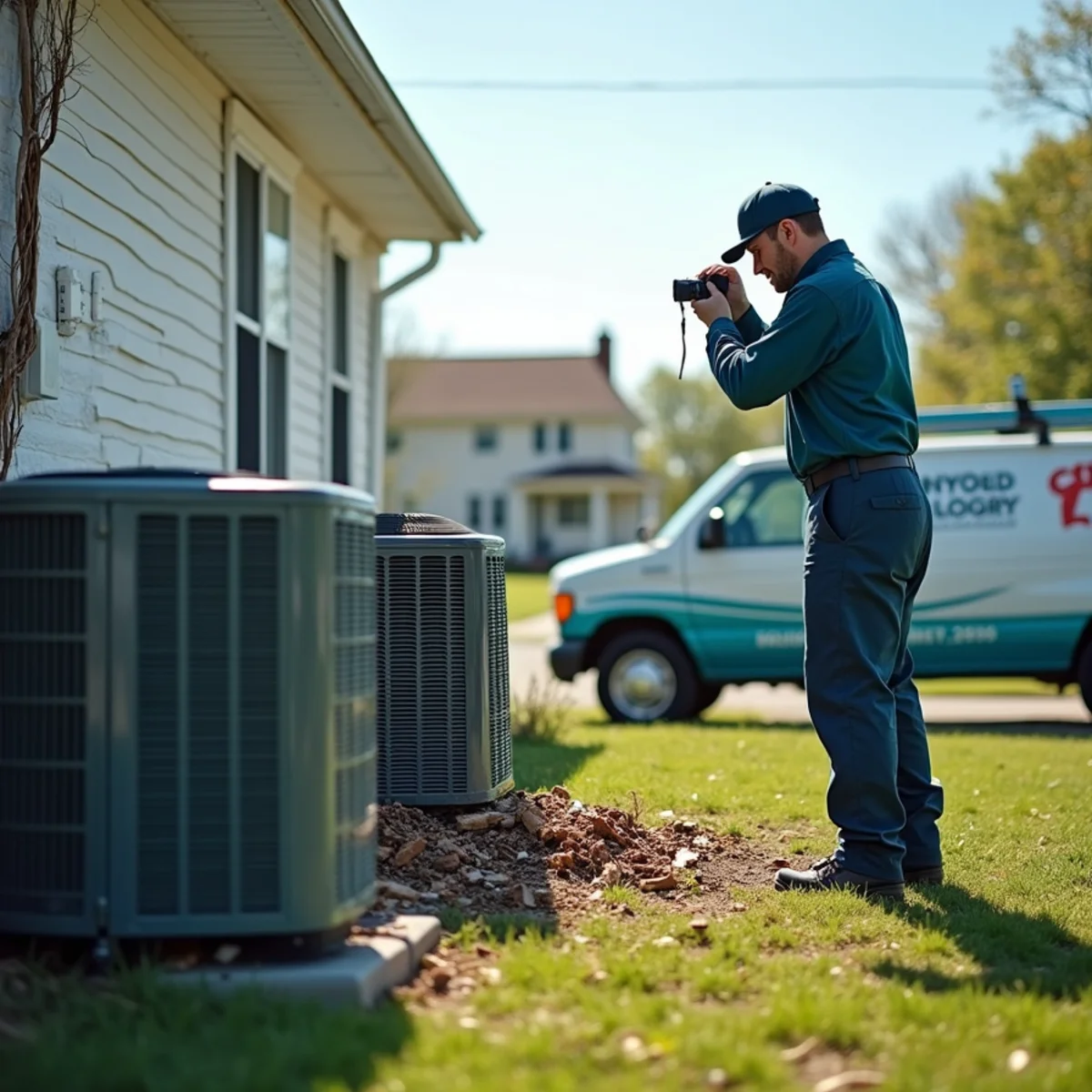
After the May 2025 tornado, here's how Somerset homeowners document HVAC damage, work with insurance, and rebuild the right way.
Safety and Documentation Come Before Repairs
If a tornado damaged your HVAC, do not power it up to test it. Photograph the damage from every angle before any cleanup, record the model and serial numbers, file your insurance claim promptly, and get a licensed contractor's written estimate. That paper trail is what decides whether the repair or replacement is fully covered.
The EF4 tornado that tore through Somerset and Pulaski County on May 16, 2025 left a lot of families dealing with damaged heating and cooling equipment on top of everything else. If your outdoor unit was hit by debris, shifted off its pad, or the storm flooded your air handler, resist the urge to fire it up to see if it still works. Powering damaged equipment can turn a repairable unit into a total loss and create a shock or fire hazard.
Before anyone touches the system, document everything. Insurance adjusters want to see the condition right after the storm, so thorough photos taken before cleanup protect your claim.
- Photograph the outdoor unit from several angles, including debris impact and any shift off the pad.
- Capture the indoor air handler, ductwork, and any water intrusion or fallen debris.
- Note the model and serial numbers before equipment is hauled away.
- Keep damaged parts until your adjuster has seen them.
How HVAC Damage Shows Up After a Tornado
Tornado damage to HVAC systems is not always obvious. A condenser can look intact but have bent coil fins that choke airflow, a cracked line set leaking refrigerant, or electrical components fried by a power surge as the grid went down. Flying debris and pressure changes also loosen ductwork and pull vents apart inside walls and crawlspaces.
Our storm HVAC damage repair service includes a full diagnostic that catches the hidden problems, not just the dented panel you can see. That documentation also strengthens your insurance file, because we itemize exactly what the storm affected.
Working With Your Insurance Company
Most homeowners policies in Kentucky cover HVAC damage from a tornado as a sudden, accidental, wind-driven event. The key is a clean paper trail. File promptly, give the adjuster your photos and equipment details, and get a written repair or replacement estimate from a licensed contractor rather than accepting a rough number over the phone.
Watch for two traps. First, do not let an adjuster classify storm damage as pre-existing wear; a professional inspection report counters that. Second, if your equipment was older, ask whether your policy pays replacement cost or only depreciated value, because that changes what comes out of your pocket.
- File your claim quickly and keep a log of every call and adjuster name.
- Provide dated photos, model and serial numbers, and a licensed contractor estimate.
- Ask whether your coverage is replacement cost or actual cash value.
- Do not authorize scrapping the old unit until the claim is documented.
Repair or Replace After Storm Damage
Whether to repair or replace depends on the equipment's age, the extent of the damage, and what your policy will fund. A newer unit with a bent fin pack and a damaged line set is often worth repairing. An older system that took a direct debris hit, lost its charge, and suffered a surge is usually a replacement, and insurance frequently covers a new system in those cases.
If you do replace, treat it as a chance to right-size. A proper ACCA Manual J load calculation makes sure the new system fits your home, especially if the storm also opened up walls or a roof that changes the building's heat load. We serve hard-hit communities across the county, including down toward Faubush and along the South US-27 corridor.
The Hidden Damage We Find After a Storm
The dented panel you can see is rarely the whole story. Tornado-force wind and pressure changes do quiet damage that only shows up on a meter or a pressure gauge, which is exactly the kind of thing an adjuster misses and later disputes.
When the grid drops during a storm and comes back, the surge can fry a compressor's start components or the furnace control board even if the cabinet looks fine. Debris driven into the condenser flattens the coil fins the unit needs for airflow. A shifted outdoor unit can kink or crack the line set, bleeding out R-410A slowly. Inside, pressure swings pull duct joints apart in the crawlspace and attic, so the system leaks conditioned air even after the visible damage is fixed.
- Power-surge damage to the compressor, capacitor, or control board.
- Flattened condenser coil fins that choke airflow and raise head pressure.
- A cracked or kinked line set leaking refrigerant after the unit shifted off its pad.
- Separated duct joints and torn insulation in the crawlspace and attic.
Why Ductwork Deserves a Second Look
Homeowners focus on the unit outside, but the storm often loosens the ductwork you never see. Disconnected or crushed ducts waste the heating and cooling you pay for and can pull humid crawlspace air into the living space. Our ductwork services inspect and reseal the distribution system so a repaired or replaced unit actually performs, and we document any storm-related duct damage for your claim.
From Storm to Restored Comfort: The Steps
Recovering your heating and cooling after a tornado follows a clear order. Doing the steps in sequence protects both your safety and your claim, and when a full residential HVAC replacement is the outcome, it sets you up for a properly sized new system.
- 1. Stay safe and leave damaged equipment powered off until it is inspected.
- 2. Photograph everything and record model and serial numbers before any cleanup.
- 3. File your insurance claim and log every adjuster contact by name and date.
- 4. Get a licensed contractor's written diagnostic and estimate that itemizes storm damage.
- 5. Decide repair or replacement based on age, damage, and coverage, using a Manual J load calculation if you rebuild.
- 6. Complete the approved work with a permitted, code-compliant installation.
Let a Local Team Help You Rebuild
Recovering from a tornado is overwhelming, and your heating and cooling should not add to the stress. Call HVAC Somerset KY at +1 (327) 210-5999 for a storm-damage assessment that gives you clear answers and the documentation your insurer needs. We are a local family business that lived through this storm too, and we will help you get your home comfortable and safe again, on a timeline that respects what you are going through.
Quick Answers
Frequently Asked
Typically yes, tornado wind and debris damage is a covered peril under standard Kentucky homeowners policies. Coverage amounts depend on whether you have replacement cost or actual cash value, so review your policy and document everything.
Please don't. Powering storm-damaged equipment risks electrical faults and can turn a repairable unit into a total loss. Have it inspected first; call +1 (327) 210-5999 for a safe assessment.
Dated photos taken before cleanup plus a licensed contractor's inspection report are your best evidence. We document storm-specific damage clearly so your adjuster can see the cause.
Not necessarily. A unit knocked off its pad can have a cracked line set, bent coil, or surge-damaged electronics that run for a while, then fail. Have it inspected before you rely on it, and document the shift for your claim before anyone moves it back.
We provide the itemized diagnostic, photos, and written estimate your adjuster needs, and we will walk them through the storm-specific damage we found. Call +1 (327) 210-5999 and we will document your system so the claim moves forward with clear evidence.
Need a hand from a real Somerset tech?
Same-day service across Pulaski County — 24/7 emergency dispatch, nights, weekends & holidays.
Related Services
How We Can Help
Serving


