
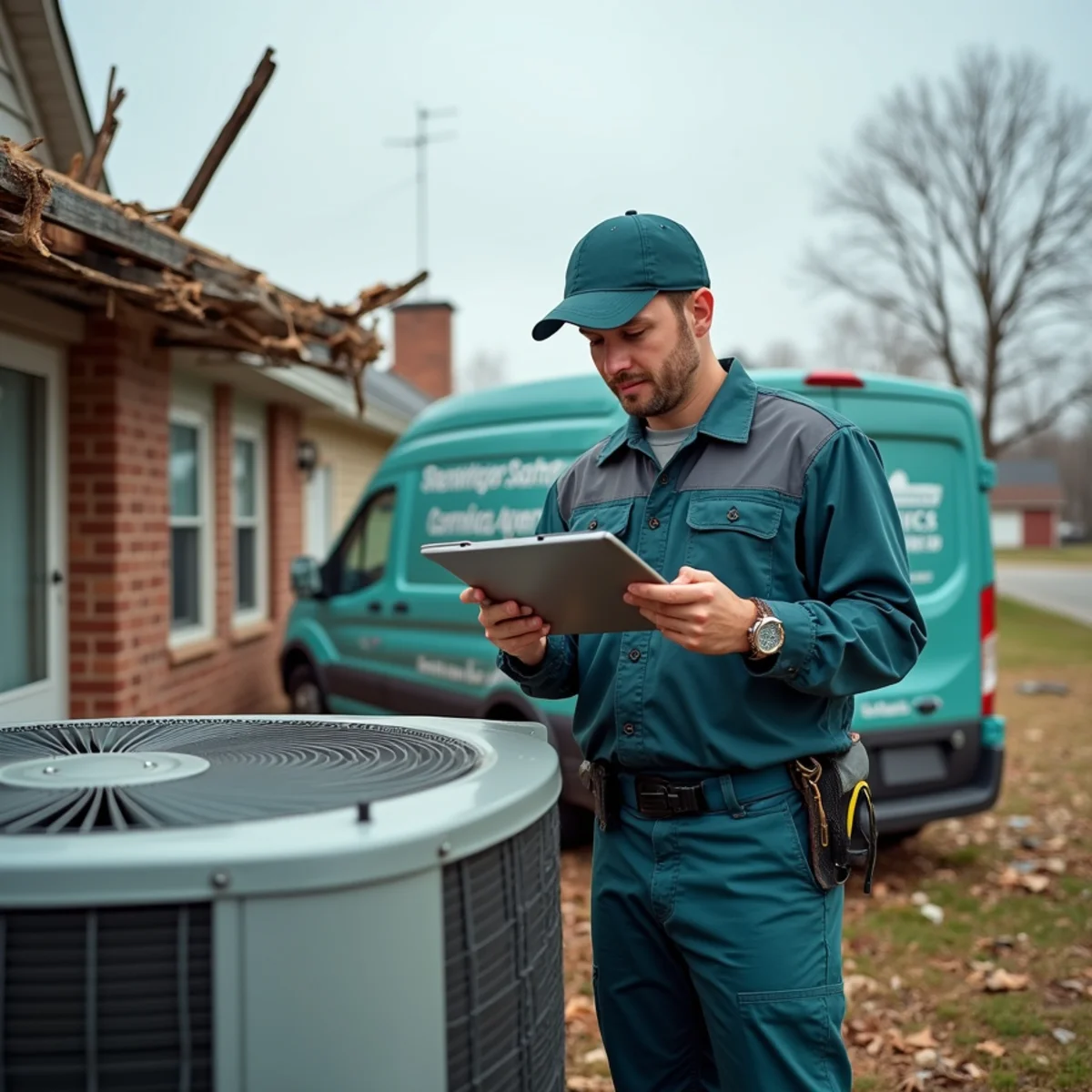
Most Kentucky policies cover tornado damage to HVAC, but the details decide what you actually get. Here's what to know.
The Short Answer, and the Fine Print
Yes, in most cases. A standard Kentucky homeowners policy covers tornado damage to your HVAC as a wind-driven peril, minus your deductible. What you actually receive depends on whether you carry replacement cost or actual cash value coverage, and on documenting the damage before any cleanup begins.
For most Kentucky homeowners, the answer is yes, tornado damage to your HVAC system is a covered peril under a standard policy. Tornadoes cause sudden, accidental, wind-driven damage, which is exactly what homeowners insurance is designed for. After the devastating May 16, 2025 tornado across Somerset, Pulaski County, and toward London, a lot of families needed to know this quickly.
The fine print is where it gets real. Coverage amounts, deductibles, and whether you are paid replacement cost or depreciated value all shape what actually lands in your pocket. Knowing your policy details before you file makes a big difference.
Replacement Cost vs. Actual Cash Value
This is the single most important distinction in your policy. Replacement cost coverage pays to replace your damaged HVAC with a new equivalent system. Actual cash value pays the depreciated value of your old equipment, which on a 15-year-old unit can be a fraction of what a new system costs.
If your policy is actual cash value, you may face a larger out-of-pocket gap on a replacement. Check which type you have before you file, and if you are unsure, your declarations page or agent can tell you. Knowing this shapes whether you push to repair or replace.
- Replacement cost: pays for a new equivalent system, best coverage.
- Actual cash value: pays depreciated value, larger out-of-pocket gap on older units.
- Your deductible applies before the insurer pays anything.
- Some policies have separate wind or hail deductibles, check yours.
How to File the Right Way
A clean claim starts with documentation. Before any cleanup, photograph the damaged equipment from multiple angles, record model and serial numbers, and keep damaged parts until the adjuster has seen them. Then get a written estimate from a licensed contractor, not a phone guess, so you have a professional basis for the claim.
Our storm HVAC damage repair service includes documentation that itemizes exactly what the tornado affected, which supports your claim. We have helped homeowners across hard-hit communities, from Poplarville to London, get their systems restored after the storm.
Common Pitfalls to Avoid
A few mistakes can cost you. Do not let an adjuster write off storm damage as pre-existing wear and tear, a professional inspection report is your best defense. Do not scrap the old equipment before the claim is documented. And do not power up storm-damaged equipment to test it, that can worsen the damage and complicate the claim.
Also, do not simply accept the first settlement figure if it does not match a licensed contractor's estimate. You have the right to provide your own documentation, and a fair insurer will reconsider when the evidence supports a higher amount.
Documentation That Holds Up With an Adjuster
A fair settlement comes down to evidence, and the strongest evidence is created in the first hours after the storm, before cleanup and before anyone powers up the equipment. Insurers pay on what can be proven was storm damage, so treat your phone camera as a claim tool.
The failures that most often get disputed are the ones you cannot see: a compressor or control board killed by the grid surge, a slow refrigerant leak from a cracked line set, and duct joints pulled apart by pressure changes. A licensed contractor's written diagnostic that itemizes each storm-caused problem is what counters a wear-and-tear denial. Our storm HVAC damage repair documentation is built to line up with what an adjuster needs, and we can inspect the ductwork the storm loosened but you would never spot on your own.
- Photograph the equipment from multiple angles before any cleanup begins.
- Record model and serial numbers, and keep damaged parts until the adjuster sees them.
- Get a written, itemized contractor diagnostic, not a phone estimate.
- Log every adjuster call by name and date in case you need to follow up.
When Insurance Funds a Full Replacement
If your unit is a total loss and you carry replacement cost coverage, the claim may fund a new system, minus your deductible. That is the moment to make the replacement count rather than just matching the old equipment. A tornado that also opened a roof or walls can change your home's heat load, so a fresh ACCA Manual J load calculation ensures the new system is sized correctly.
It is also worth asking your insurer about code-upgrade or ordinance coverage, because a proper reinstall means a permitted, code-compliant job (the Pulaski County permit runs around $50) that an older system may not have met. A residential HVAC replacement done right after a storm should leave you with a safer, more efficient system than you had before, not just a like-for-like swap.
We'll Document It and Get You Restored
Navigating insurance after a tornado is stressful enough without fighting over your HVAC. Call HVAC Somerset KY at +1 (327) 210-5999 for a storm-damage assessment and clear documentation that helps your claim move forward. We are a local family business that lived through the May 2025 storm alongside our neighbors, and we will help you get your heating and cooling restored, backed by the paperwork your insurer needs to see.
Quick Answers
Frequently Asked
If you have replacement cost coverage and the unit is a total loss, often yes, minus your deductible. With actual cash value coverage, you may only receive the depreciated value, so check your policy type.
File as soon as possible; most policies require prompt notice. Document the damage with photos right away and contact your insurer, then get a licensed contractor estimate to support the claim.
Provide a licensed contractor's inspection report showing storm-specific damage. That professional documentation counters a wear-and-tear denial. We can help, call +1 (327) 210-5999.
Yes. Equipment can run for a while with surge-damaged electronics, a slow refrigerant leak, or a bent coil, then fail. Have it inspected and documented, and file based on the professional diagnostic. Running it hard in the meantime can worsen the damage and complicate the claim.
Yes, your deductible comes out before the insurer pays, and some policies carry a separate wind or hail deductible, so check your declarations page. Weigh the deductible against the repair or replacement cost. Call +1 (327) 210-5999 for a documented estimate to compare against your policy.
Need a hand from a real Somerset tech?
Same-day service across Pulaski County — 24/7 emergency dispatch, nights, weekends & holidays.
Related Services
How We Can Help
Serving


