
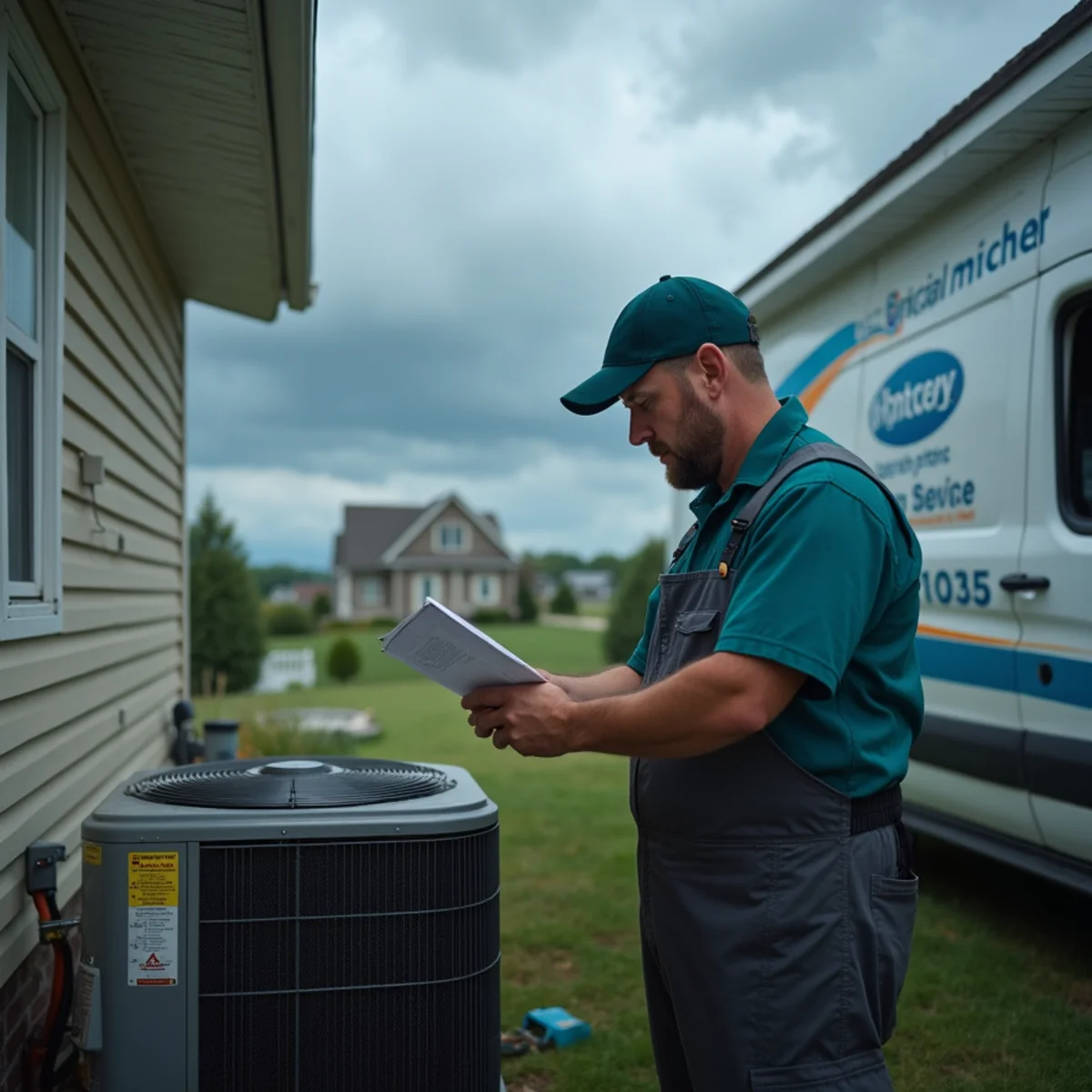
After the May 2025 tornado, storm prep is on everyone's mind. Here's how to protect your HVAC before the next one and recover safely after.
Storm Season Is Real Here
The short version: before storm season, trim limbs over the outdoor unit, anchor it, add a surge protector, and photograph your equipment for insurance. When a bad storm is coming, shut the AC off at the breaker if it is safe. Afterward, never restart a flooded or damaged unit, have it checked first. Those steps prevent most storm-related HVAC losses and speed any claim.
Pulaski County knows storm season all too well. The EF4 tornado that struck Somerset and the surrounding area in May 2025 was a stark reminder, but even ordinary spring and summer storms bring damaging wind, hail, lightning, and flooding that can wreck an HVAC system. A little preparation before the storms roll in protects your equipment and speeds your recovery.
You cannot stop a tornado, but you can reduce the everyday storm damage, and be ready to respond fast when serious weather hits. Here is a practical checklist for our region.
Before the Storm
Preparation is your best defense. Some of these steps protect the equipment directly; others make recovery easier if damage does occur. Work through them at the start of storm season and revisit before any major forecast.
The outdoor unit is your most exposed component, so much of the prep focuses there. Documentation matters too, having a record of your equipment makes any future insurance claim far smoother.
- Trim tree limbs that could fall on the outdoor unit in high wind.
- Secure or anchor the outdoor unit per manufacturer guidance.
- Clear the area of loose items that wind could throw into the unit.
- Photograph your equipment and record model and serial numbers for insurance.
- Consider a surge protector to guard against lightning-related electrical damage.
- Make sure your crawlspace or basement has working drainage against flooding.
During and Immediately After
When a storm hits, safety comes first, but a couple of steps protect your system. If severe weather is imminent and safe to do, some homeowners shut off the AC at the breaker to protect it from power surges as the grid fluctuates. After the storm, do not rush to fire the system back up if there was flooding, a power surge, or visible damage.
Powering up a storm-damaged unit can turn a repairable problem into a total loss and create a safety hazard. If the outdoor unit was hit, submerged, or the power flickered hard, have it checked first. Our storm HVAC damage repair team assesses damage safely and documents it for your insurance.
The Damage You Can't See From the Ground
Some storm damage is obvious, a limb through the condenser, a unit shifted off its pad. The costly damage is often the kind you cannot see, and knowing about it helps you make the call on whether to run the system after a storm.
Hail and flying debris bend the thin aluminum fins on the outdoor coil; enough of that restricts airflow and makes the system run hot and inefficient even though it still turns on. Lightning and grid surges are worse, they can fry the control board, capacitor, or compressor windings without leaving a mark, and a unit that survived the surge may fail days later. And a unit that was tilted or moved by wind can have a kinked refrigerant line or stressed electrical connections. That is why 'it still runs' is not proof it is fine.
- Bent condenser fins from hail or debris, which choke airflow.
- Surge damage to the control board, capacitor, or compressor from lightning or grid swings.
- A shifted or tilted outdoor unit with a kinked line or strained wiring.
- Water intrusion into electrical components if the unit was partly submerged.
- Debris packed into the coil and cabinet that traps heat and moisture.
Recovering the Right Way
If a storm does damage your system, a careful recovery saves money and headaches. Document everything with photos before cleanup, keep damaged parts until an adjuster sees them, and get a professional assessment and written estimate. Whether the outcome is a repair or a replacement, doing it methodically protects your insurance claim and ensures the work is done safely and to code, and any replacement should be permitted, a Pulaski County HVAC permit runs around $50, so the work is inspected and legitimate for resale.
Regular HVAC maintenance also plays a role, a well-maintained system is more resilient, and a technician who knows your equipment can spot storm damage faster. Our storm HVAC damage repair team documents everything for your insurer. We help homeowners across the county, from town out to Pulaski County back roads and over toward Science Hill, both prepare for and recover from storms.
Get Storm-Ready and Stay Ready
The best time to prepare for storm season is before the next system rolls through. Call HVAC Somerset KY at +1 (327) 210-5999 for help protecting your HVAC and for fast, honest service if a storm does cause damage. We are a local family business that lived through the May 2025 tornado alongside our neighbors, and we are here to help our community stay prepared, and bounce back quickly, when severe weather strikes.
Quick Answers
Frequently Asked
You can shut the AC off at the breaker before a severe storm to protect it from power surges, if it is safe to do so. Do not cover a unit in use. After the storm, do not restart a flooded or damaged unit until it is checked.
Do not power it up. Photograph the damage before cleanup, record model and serial numbers, keep damaged parts, and get a professional assessment. Call +1 (327) 210-5999 for a safe evaluation and insurance documentation.
Yes. Lightning and grid fluctuations during storms can fry HVAC electronics. A properly installed surge protector helps guard the system's controls, a worthwhile safeguard in our storm-prone region.
Not necessarily. Hail-bent fins, surge damage to the control board or compressor, and a kinked line from a shifted unit can all leave the system running but failing, sometimes days later. If your unit took a hit, flooded, or the power surged hard, have it checked before you rely on it.
Yes, a replacement should be permitted, a Pulaski County HVAC permit runs around $50, so the work is inspected and to code. We handle permitting as part of a storm replacement, which also keeps the equipment legitimate for insurance and resale.
Need a hand from a real Somerset tech?
Same-day service across Pulaski County — 24/7 emergency dispatch, nights, weekends & holidays.
Related Services
How We Can Help
Serving


