
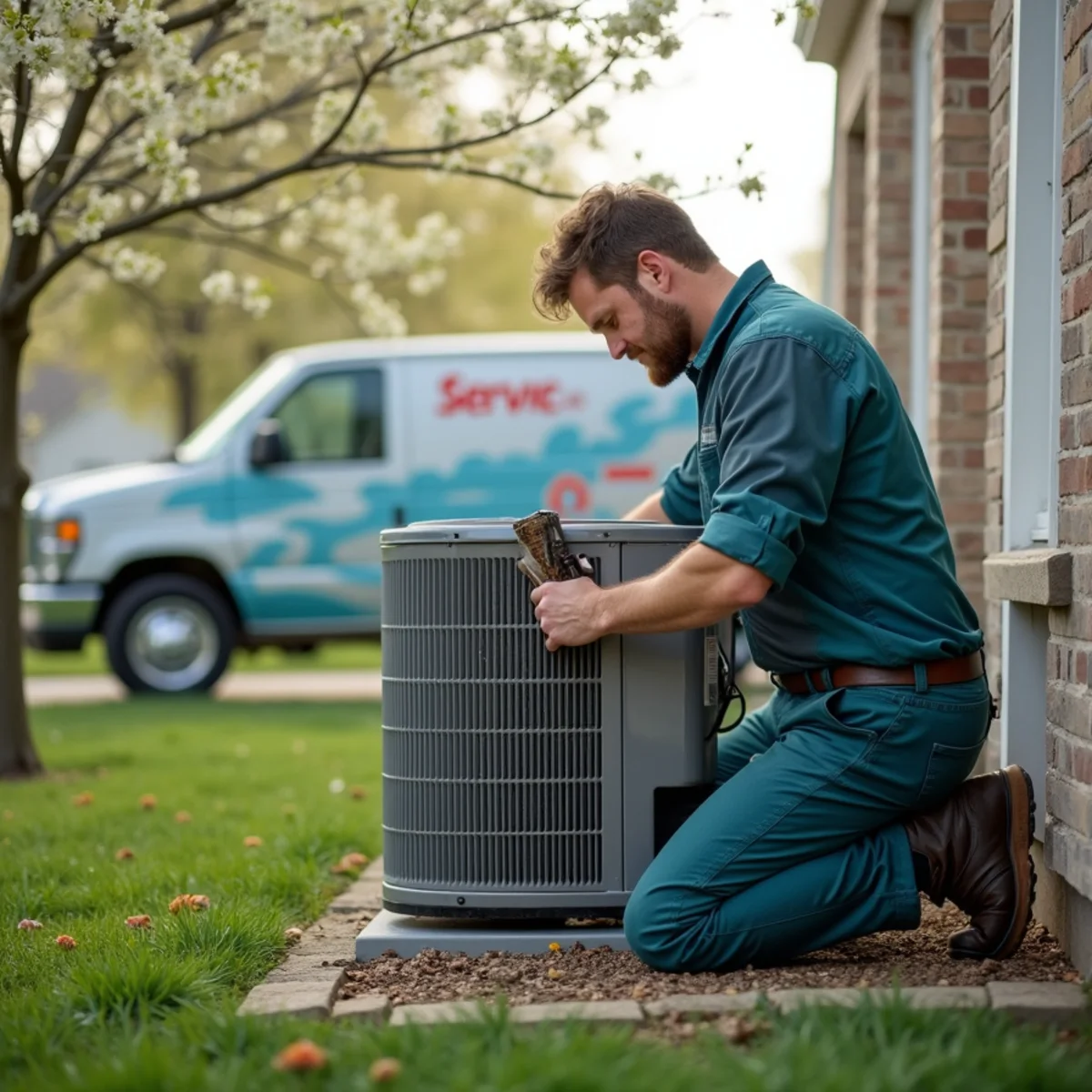
Before the humid Pulaski County summer hits, run through this spring AC checklist so your cooling is ready, and efficient, when you need it.
Beat the Summer Rush
A spring AC checklist splits into DIY steps, replace the filter, clear debris around the outdoor unit, rinse the coil, check the drain, and test it early, and a professional tune-up that verifies refrigerant charge, tests the capacitor and contactor, and confirms the system dehumidifies properly. Handle both before the first heat wave and you avoid the July breakdown.
Spring is the smart time to do it in Pulaski County. Our summers bring real heat, stretches near 87 degrees, and relentless humidity off Lake Cumberland, and the last thing you want is to discover a problem during the first hot spell, along with everyone else calling for service. A little attention in the mild spring weather saves you from sweating out a breakdown in July.
A spring check makes sure your AC will cool when you need it and runs efficiently to keep summer bills in check. Part of the checklist is easy DIY; the rest is worth a professional tune-up before the season ramps up.
DIY Spring Steps
There are several things you can do yourself to prep your AC, and they make a real difference. Winter leaves debris, dust, and sometimes critters around outdoor equipment, so spring cleanup matters.
Work through these before the first hot spell. If your AC does not cool properly when you test it, or you notice odd noises or smells, that is the signal to call for service rather than wait.
- Replace the air filter for good airflow and efficiency.
- Clear leaves, grass, and debris from around the outdoor unit, at least two feet of clearance.
- Gently rinse the outdoor condenser coil with a hose (power off first).
- Check that the condensate drain line is clear to prevent humidity backups.
- Test the system early on a mild day to confirm it cools before you need it.
- Make sure vents throughout the home are open and unobstructed.
What a Professional AC Tune-Up Includes
A homeowner can handle the cleanup, but a professional tune-up checks the parts that determine whether your AC will make it through a hard summer. This is where refrigerant levels, electrical components, and system performance get verified by someone with the right tools.
Our HVAC maintenance spring tune-up catches small problems, low refrigerant, a weak capacitor, a dirty coil, before they leave you without cooling in the heat. It also keeps the system dehumidifying properly, which is huge for comfort in our climate.
- Checking refrigerant charge and testing for leaks.
- Inspecting and testing the capacitor and contactor.
- Cleaning the coils for proper heat transfer.
- Checking the blower and airflow for good dehumidification.
- Testing the thermostat and overall system performance.
- Inspecting electrical connections for safety.
The Capacitor and Refrigerant Story
If you want to understand why a professional tune-up prevents breakdowns, look at two components. The run capacitor is a small cylinder that gives the compressor and fan motor the jolt they need to start. Heat is hard on capacitors, and after our long summers they weaken. A tech can measure a capacitor that is drifting out of spec and swap it in the spring for a few dollars, rather than having it fail on the first 90-degree day and take the compressor's start with it, one of the most common no-cool calls we run.
Refrigerant is the other. Your system runs on a sealed charge of R-410A (older units may still hold R-22), and a system that is low is not simply topped off, it is leaking, and the leak has to be found and repaired. Low charge makes the AC run longer, cool worse, and can freeze the coil into a block of ice. A tune-up checks the charge and pressures so a small refrigerant problem gets caught before it becomes a compressor failure. If yours is low, our refrigerant leak repair team finds and fixes the source instead of just refilling it.
Why Humidity Makes This Extra Important
In our Lake Cumberland climate, your AC does not just cool, it controls humidity, and that is half of what makes a home comfortable. A poorly maintained system might still blow cold air but fail to pull out enough moisture, leaving your home clammy even when the thermostat reads fine, ideally you want indoor relative humidity somewhere in the 30 to 50 percent range. Spring maintenance keeps the whole moisture-removing process working.
A clear condensate drain is especially critical here, our humidity produces a lot of condensate, and a clogged drain can trip the safety float switch and shut the system down on a hot day. If you are shopping for a new system, note that today's units are rated by SEER2, and higher-efficiency equipment that runs longer, gentler cycles usually dehumidifies better than an oversized unit that blasts cold and shuts off. We help homeowners across the county, including in West Somerset and out toward Ferguson, stay cool and comfortable all summer.
Get Ready Before the Heat Arrives
A little spring prep means a summer without cooling emergencies. Call HVAC Somerset KY at +1 (327) 210-5999 to schedule your spring AC tune-up while the weather is still mild and schedules are open. We are a local family business that knows how brutal a humid Pulaski County summer can be, and we will make sure your AC is ready to keep your family cool and comfortable when the heat hits.
Quick Answers
Frequently Asked
Spring is ideal, before the first heat wave. It gives you time to fix any issues in mild weather and beat the summer service rush, so you are not left without cooling when it is 90 degrees out.
Yes, carefully. Turn off the power, clear debris, and gently rinse the coil with a hose, not a pressure washer, which bends the fins. Leave refrigerant and electrical checks to a professional.
Your AC controls humidity as well as temperature, and a poorly maintained or oversized system may cool without dehumidifying well. You want indoor humidity around 30 to 50 percent. Spring maintenance helps, call +1 (327) 210-5999 if it persists.
A frozen coil usually means restricted airflow from a dirty filter or coil, or a low refrigerant charge from a leak. Running the system iced up can damage the compressor. Turn it off to thaw and call for service, low refrigerant needs the leak found and repaired, not just a refill.
It depends on the unit's age, condition, and repair history. Modern SEER2-rated systems cool more efficiently, and South Kentucky RECC sometimes offers rebates on qualifying equipment. We give honest repair-versus-replace guidance rather than pushing a sale, call +1 (327) 210-5999.
Need a hand from a real Somerset tech?
Same-day service across Pulaski County — 24/7 emergency dispatch, nights, weekends & holidays.
Related Services
How We Can Help
Serving


