
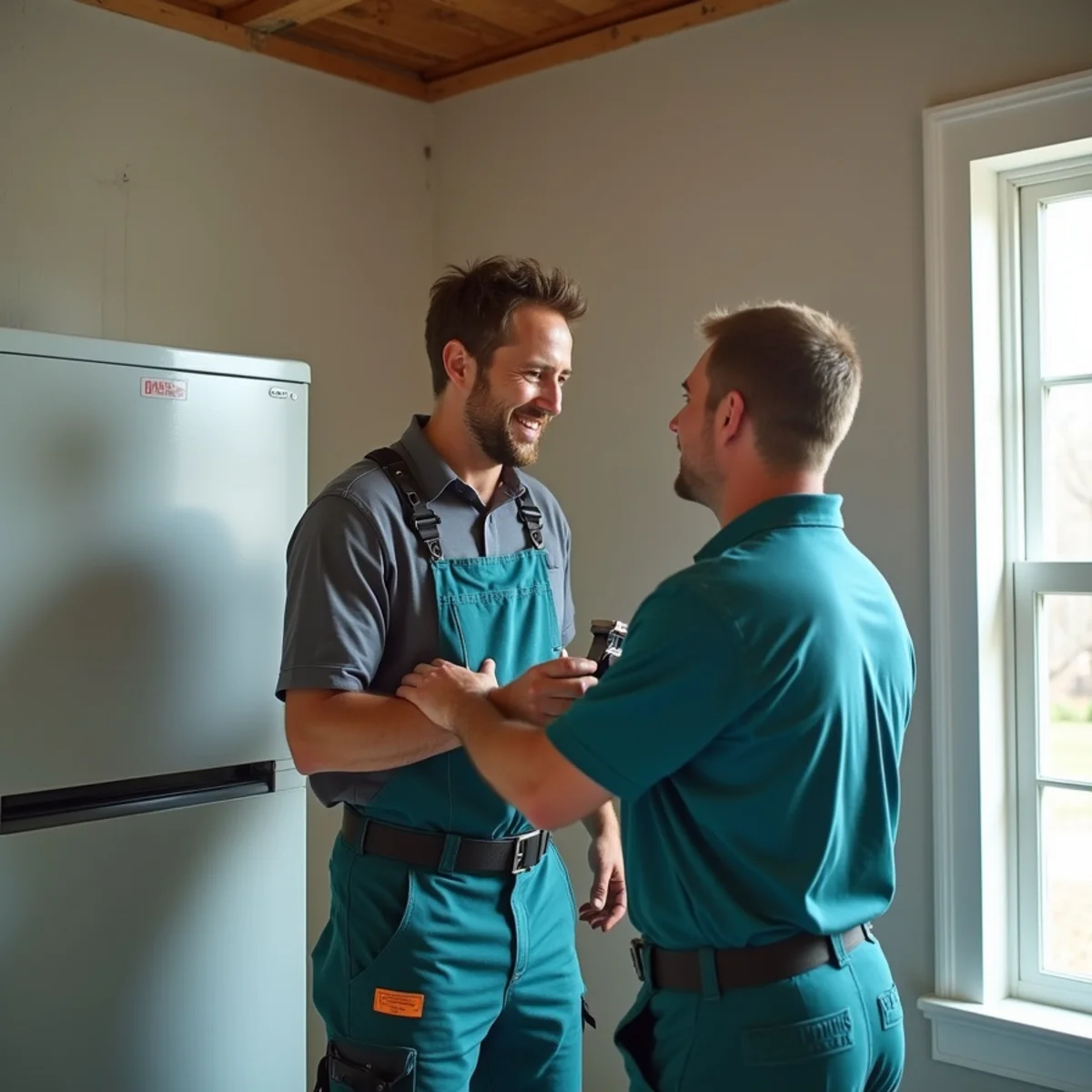
Rebuilding after the May 2025 EF4 tornado is a chance to install HVAC that's safer, more efficient, and correctly sized.
Rebuilding After a Historic Storm
Rebuilding HVAC after the May 2025 EF4 tornado starts with an honest damage assessment, then a right-sized replacement using a fresh Manual J load calculation for the rebuilt home. Because insulation, roofing, and layout often change in a rebuild, this is the moment to correct old sizing mistakes and step up efficiency rather than replacing what you lost like-for-like.
The EF4 tornado that struck Somerset, Pulaski County, and the London area on May 16, 2025 was one of the most destructive storms our region has seen. As families rebuild homes and lives, the heating and cooling system is a central piece, both something the storm destroyed and something a rebuild lets you get right. For all the hardship, a rebuild is a chance to install a system that is safer, more efficient, and better suited to your home than the one you lost.
As a local family business that weathered this storm alongside our neighbors, we have been helping homeowners think through those decisions. Here is what matters when you rebuild your HVAC after storm damage.
Assessing What Can Be Saved
Not every storm-damaged system is a total loss, and not every intact-looking system is fine. The first step is an honest assessment. A condenser knocked off its pad or hit by debris may have hidden coil, line, or electrical damage. An air handler that took on water or debris needs careful evaluation before it is trusted again. And a system that suffered a power surge as the grid went down can have fried controls even if it looks untouched.
Our storm HVAC damage repair assessment documents exactly what the storm affected, which serves double duty: it tells you what is salvageable and it supports your insurance claim. We would rather save you money on a repairable unit than sell a replacement you do not need.
The Case for Rebuilding Smarter
When a system is a total loss, the rebuild is an opportunity. If your old unit was undersized, oversized, or aging, you do not have to replace it with the same thing. A rebuild often coincides with changes to the home, new insulation, a repaired or upgraded roof, altered layouts, all of which change the heating and cooling load. That makes it the perfect moment for a proper ACCA Manual J calculation to size the new system correctly.
Many homeowners also use the rebuild to move to a more efficient system, a modern heat pump or dual-fuel setup that lowers monthly bills for years. If your home is off the gas grid, this is a chance to reconsider your whole heating approach rather than defaulting to what was there before.
- Right-size the new system with a Manual J load calculation for the rebuilt home.
- Consider higher-efficiency equipment for long-term savings.
- Account for insulation, roofing, and layout changes from the rebuild.
- Address any ductwork damaged or exposed during the storm.
- Capture any available rebates on high-efficiency equipment.
Coordinating With Your Rebuild
HVAC in a rebuild has to be coordinated with the rest of the work, framing, insulation, electrical, and roofing all interact with the system. Installing at the right stage, with proper permitting (the Pulaski County permit runs around $50), avoids costly rework and ensures everything is up to code. We are used to working alongside contractors and adjusters to keep the whole project moving.
We are serving hard-hit communities across the region, from the Somerset area out toward Faubush and over to London. Wherever the storm reached, we are helping neighbors rebuild comfortable, reliable homes.
Hidden Storm Damage We Look For
The damage that ends up costing homeowners most is often the damage you cannot see. A condenser that looks upright may have taken a debris strike that bent coil fins or nicked a refrigerant line, and it can leak slowly for weeks. When the grid went down across Pulaski County, the surges that rippled through it fried control boards and capacitors in systems that otherwise look untouched. And any air handler or furnace that took on water or insulation debris needs the blower, controls, and electrical carefully evaluated before it is trusted on a circuit again.
This is also why documentation matters. We photograph and itemize exactly what the storm affected, which supports your insurance claim and keeps the adjuster and your contractor on the same page. A thorough assessment protects you from both directions, paying out of pocket for hidden damage a claim should cover, and replacing equipment that is genuinely repairable.
- Bent condenser fins and nicked line sets from flying debris.
- Fried control boards and capacitors from grid surges during the outage.
- Water or debris intrusion into the air handler and its electrical.
- A condenser knocked off or loosened from its pad.
- Ductwork crushed, disconnected, or contaminated during the storm.
Building It Back Stronger
A rebuild is the rare chance to fix what was wrong before the storm and harden against the next one. We anchor the new condenser securely to its pad, add surge protection to shield the control boards, and route the line set and disconnect to code. Where a home is off the gas grid, we will lay out whether a modern heat pump or dual-fuel system beats defaulting to the old setup.
Getting the sizing and installation right is the difference between comfort and a decade of frustration. Our AC installation and furnace installation teams size with Manual J and S, pull the required Pulaski County permit (around $50), and coordinate the install at the right stage of the rebuild. Once you are back in, seasonal HVAC maintenance keeps the new equipment under warranty and running right.
Let a Neighbor Help You Rebuild
Rebuilding after the tornado is a long road, and your heating and cooling is one part we can take off your plate. Call HVAC Somerset KY at +1 (327) 210-5999 for a storm-damage assessment and honest guidance on rebuilding your HVAC the right way. We are a local family business that lived through this storm, and we are committed to helping our community come back stronger, one comfortable home at a time.
Quick Answers
Frequently Asked
Not necessarily. A rebuild is a chance to right-size and upgrade. If your home changed during the rebuild, a Manual J calculation may point to a different, better-fitting system. We will give you honest guidance.
Yes. We document storm damage for your claim and coordinate with contractors and adjusters to install at the right stage of the rebuild. Call +1 (327) 210-5999 to get started.
Not always. Some damage is repairable, some hidden damage totals a unit that looks fine. An honest assessment tells you which, and we would rather save you money on a repair than oversell a replacement.
Yes, a mechanical permit is required, and the Pulaski County permit typically runs around $50. Permitting ensures the install is inspected and up to code, which also protects your insurance and resale down the road. We handle the permit as part of the job.
Absolutely. When the grid failed during and after the storm, surges commonly fried control boards and capacitors while leaving the cabinet untouched. We test the electrical and controls, not just the exterior, and we recommend surge protection on the new equipment to prevent a repeat.
Need a hand from a real Somerset tech?
Same-day service across Pulaski County — 24/7 emergency dispatch, nights, weekends & holidays.
Serving


