
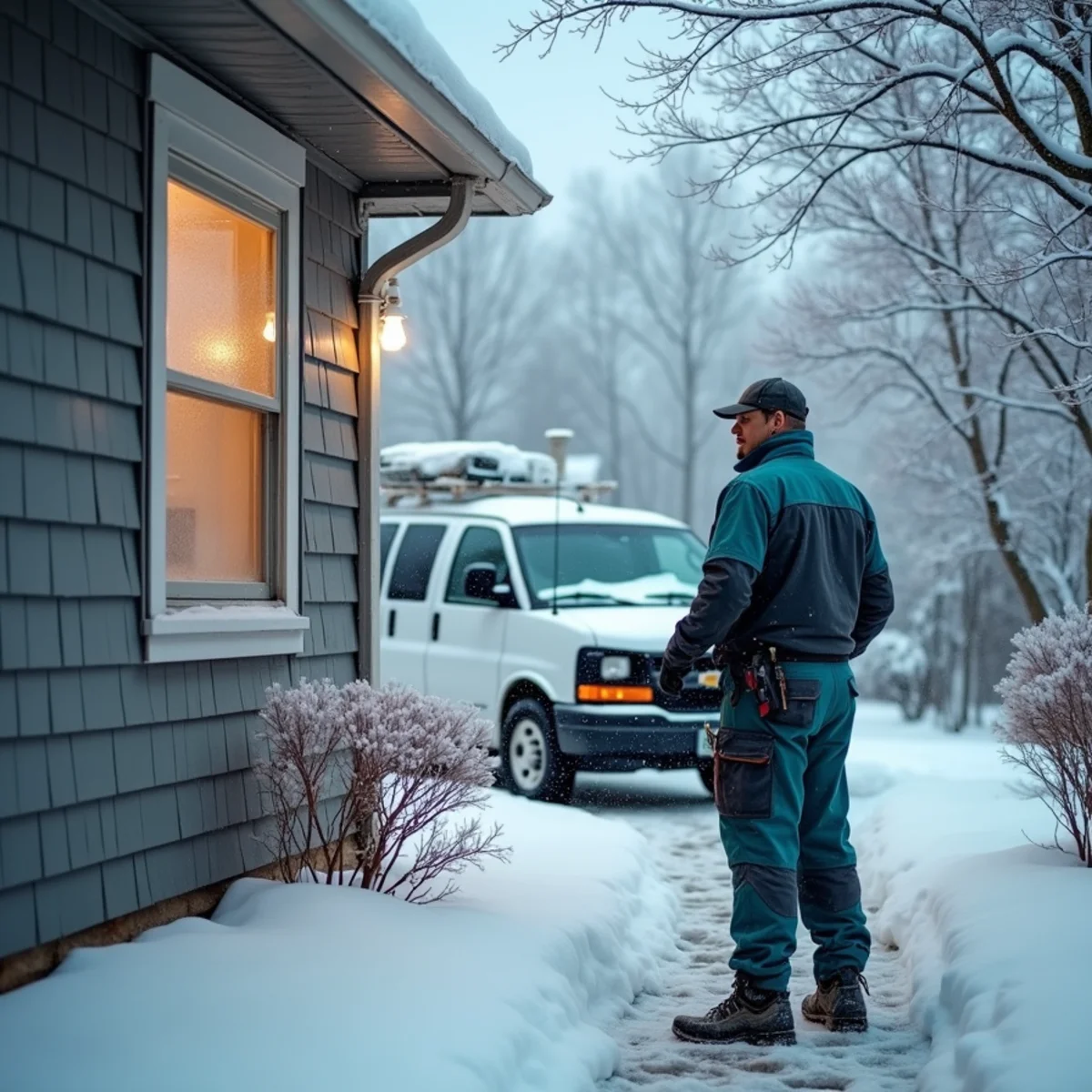
When an ice storm knocks out your heat in Somerset, these first moves keep your family safe and your pipes from freezing.
First, Make Sure Everyone Is Warm and Safe
If your heat quits during a Somerset ice storm, do this first: get everyone into one warm central room, confirm the thermostat is set to Heat and the furnace switch is on, reset the heating breaker one time, and set faucets to a slow drip so exterior pipes keep moving water. If the system stays dead after those checks, call for emergency service before the house cools further.
January nights on the Cumberland Plateau routinely dip into the low-to-mid 20s, and an ice storm can push wind chills well below that. When your system quits, your first job is not diagnosing the furnace, it is keeping your household safe. Move everyone into one central room, close off unused spaces, and layer up with blankets before the house starts shedding heat.
Never heat your home with a gas range, charcoal grill, or an unvented generator running in the garage. Every winter Kentucky loses people to carbon monoxide from improvised heat, and an ice storm that traps you indoors makes that risk worse. If you use a portable propane or kerosene heater, keep it away from curtains and bedding and crack a window for fresh air.
- Gather the family into one room and seal drafts with towels at the door base.
- Keep a working CO detector with fresh batteries within earshot.
- Set faucets to a slow drip so pipes on exterior walls keep moving water.
- Open cabinet doors under sinks so warm room air reaches the plumbing.
Quick Checks Before You Assume the Worst
A surprising number of no-heat calls during a storm trace back to something simple. Before you decide the system has failed, walk through a short checklist. Ice storms often knock out power in flickers that trip breakers or lock out equipment, so a reset is worth trying first.
If you have a heat pump, look outside. A coating of ice on the outdoor coil can block airflow and force the unit into a protective shutdown. Do not chip at it with anything sharp; you can crack a coil or a refrigerant line in seconds.
- Confirm the thermostat is set to Heat and the temperature is above the current room reading.
- Check the furnace or air handler switch (it looks like a light switch) is on.
- Reset the breaker for the heating system once; if it trips again, stop.
- Make sure the outdoor unit is not buried in ice or snow drift.
When It Is Time to Call for Emergency Help
If the house keeps losing heat and the checks above turn up nothing, that is the moment to bring in a professional rather than keep guessing in the cold. Our no-heat emergency service is built for exactly these Kentucky nights, and we prioritize homes with infants, older adults, or anyone with a medical condition that makes cold dangerous.
We serve the whole region, from town out to Pulaski County back roads and up toward Science Hill. During widespread storms we triage by safety, so tell us who is in the home and how cold it has gotten inside when you call.
Protecting Your Pipes While You Wait
Frozen pipes turn a one-night heating outage into a multi-thousand-dollar water damage claim. While you wait for power or a technician, keep water moving and heat concentrated where the plumbing runs. Interior walls, crawlspaces, and that laundry room on the north side of the house are the usual trouble spots in older Somerset homes.
If you know where your main water shutoff is, make sure you can reach it fast. A pipe that bursts while you sleep does the most damage; a quick shutoff limits it to a puddle instead of a flood.
- Keep a pencil-thin stream running at the farthest faucet from your main.
- Set space heaters (safely) near exposed pipe runs, not near anything flammable.
- Know the location of your main shutoff valve before you need it.
Furnace or Heat Pump: Why the Fix Is Different
Somerset homes heat in a few different ways, and what fails during an ice storm depends on which system you have. Knowing your setup helps you describe the problem accurately and helps us bring the right parts on a night when a second trip is not an option.
Gas and Propane Furnaces
A furnace that clicks but never lights often has a failed hot-surface igniter, a dirty flame sensor, or a control board that locked out after the storm's power flickers. Repeated brownouts are hard on furnace electronics. If the blower runs but only pushes cold air, the burners are not firing, and that is a job for our furnace repair team rather than something to attempt in the dark.
Heat Pumps
Heat pumps struggle most in freezing rain, when the outdoor coil ices over and the defrost cycle cannot keep up. The system then leans on auxiliary or emergency heat, which is why your electric use spikes during a cold snap. A heat pump encased in solid ice needs to be shut down before the compressor is strained; our heat pump service can find out why the defrost cycle failed.
What Our Technicians Check First on a No-Heat Call
When we arrive at a dead system during an ice storm, we work a fast diagnostic sequence instead of swapping parts and hoping. Sharing it helps you understand what you are paying for and sometimes lets you spot the fix yourself before we get there.
The most common storm-night failures we find are a control board locked out by power flickers, a weak or cracked run capacitor that will not start the blower or compressor motor, and a failed igniter on gas furnaces. On heat pumps it is usually the defrost board or sensor. None of these are guesswork once a technician can meter the components against spec.
- Confirm the thermostat is calling for heat and has good batteries or C-wire power.
- Check for 24-volt control power and read any stored fault codes on the furnace board.
- Test the capacitor and contactor, common cold-weather failure points on the blower and outdoor unit.
- Inspect the igniter, flame sensor, and gas valve on furnaces; the defrost board and sensor on heat pumps.
- Verify airflow is not choked by ice, drifted snow, or a filter that has not been changed all season.
Don't Tough It Out in the Cold, Call Us
An ice storm is not the night to wait until morning and hope the furnace comes back on its own. If your home is losing heat and the simple fixes have not worked, call HVAC Somerset KY at +1 (327) 210-5999. We are a local, family-run team that knows these winters, and we would rather walk you through a safe fix on the phone than have you spend a dangerous night guessing. Keep our number handy before the next storm rolls in off the plateau.
Quick Answers
Frequently Asked
Usually yes, as long as the outdoor unit is not encased in ice. Heat pumps run defrost cycles automatically, but heavy freezing rain can overwhelm them. If the coil is a solid block of ice, shut the system off and call us rather than letting it strain.
Repeated power flickers can lock out a modern furnace's control board as a safety measure. Try a single breaker reset. If it will not relight after power stabilizes, the igniter or control board may need service.
We triage by safety during regional storms, so homes with infants, elderly residents, or medical needs come first. Call +1 (327) 210-5999 and tell us your situation so we can prioritize correctly.
Yes, if the outdoor unit is icing over. Emergency heat uses your backup electric or furnace heat and gives the frozen coil a chance to thaw. Expect a higher power bill while it runs, and call us if the ice keeps returning or the house will not hold temperature.
Keep a pencil-thin stream running at the farthest faucet, open cabinet doors so warm air reaches supply lines, and set a safe space heater near exposed runs. Older homes around Pulaski County often have uninsulated crawlspace plumbing that freezes first, so know where your main shutoff is in case a line does let go.
Need a hand from a real Somerset tech?
Same-day service across Pulaski County — 24/7 emergency dispatch, nights, weekends & holidays.
Related Services
How We Can Help
Serving


