
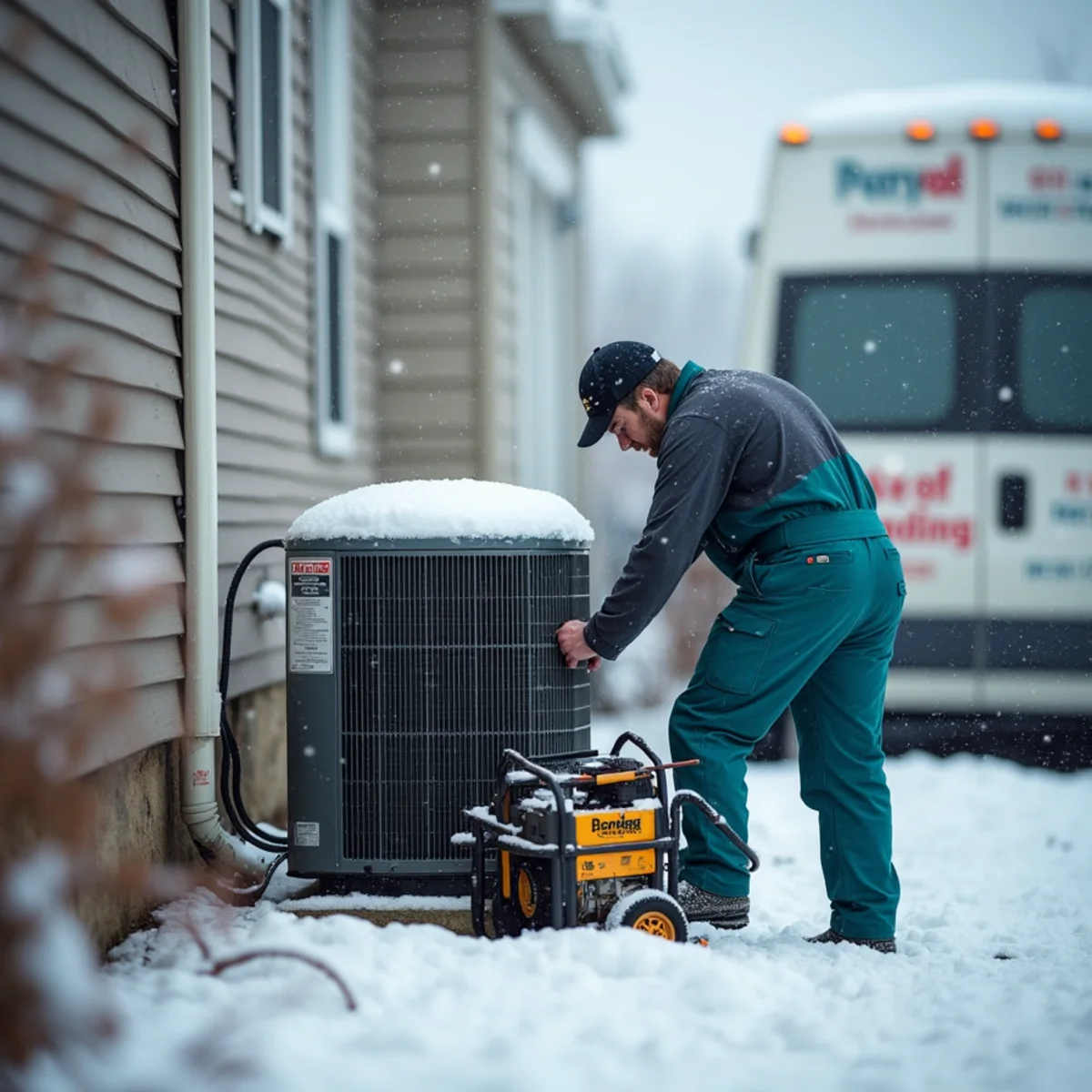
Ice storms on the Cumberland Plateau bring outages and equipment strain. Here's how to protect your HVAC before the next one.
Why Ice Storms Are So Hard on HVAC
To protect your HVAC from a Cumberland Plateau ice storm: trim limbs that could fall on the outdoor unit, keep its base clear of ice, never chip ice off the coil, and have a safe plan for the power outage that usually follows, since even gas and propane furnaces need electricity to run. A pre-winter tune-up readies the defrost and backup heat.
Ice storms are a signature winter hazard on the Cumberland Plateau, and they are uniquely rough on heating systems. Freezing rain coats everything in heavy ice, which snaps tree limbs onto outdoor units, brings down power lines, and can encase your heat pump or condenser in a thick shell. On top of that, the widespread power outages that follow leave homes without heat exactly when they need it most.
For a region that sees these storms regularly, a little preparation goes a long way. The goal is to protect your equipment from the ice itself and to have a plan for the outages that come with it.
Protecting the Outdoor Unit
Your outdoor unit, whether a heat pump running all winter or an AC condenser sitting idle, faces the brunt of an ice storm. A heat pump needs to keep running, so you cannot cover it, but you can take other steps. Trim back tree limbs that could break under ice and crash onto the unit. Make sure the unit sits high enough and clear of where ice and snow accumulate.
During a storm, resist the urge to chip ice off the unit, the coil fins and refrigerant lines puncture easily. A heat pump's defrost cycle handles normal frost, but if it becomes a solid block of ice, switch to backup heat and let it thaw rather than forcing it. Our HVAC maintenance before winter checks that the defrost system and backup heat are ready for exactly these conditions.
- Trim tree limbs that could fall on the unit under ice load.
- Keep the unit clear of snow and ice buildup at its base.
- Never chip ice off the coil, use backup heat to thaw if it ices over.
- Have the defrost cycle and backup heat checked before winter.
Preparing for the Outage
Ice storms and power outages go hand in hand here, so plan for no power, not just cold. If your heat depends on electricity, and even gas and propane furnaces need electricity to run their blowers and controls, an outage means no heat. Know how you will stay warm safely, and never use a range, grill, or unvented generator indoors for heat, carbon monoxide kills.
Have working carbon monoxide and smoke detectors with fresh batteries. Keep faucets dripping to protect pipes, know where your water shutoff is, and gather warm supplies in one room. If you rely on a generator, have it professionally set up so it can safely power your heating system, and never run it in an enclosed space.
- Assume an outage means no heat, even with gas or propane systems.
- Never heat with a stove, grill, or unvented generator indoors.
- Keep CO and smoke detectors working with fresh batteries.
- Drip faucets and know your main water shutoff location.
- Have any generator professionally and safely connected.
When the Storm Knocks Out Your Heat
Even with preparation, ice storms cause failures, a tripped and locked-out furnace, a heat pump iced solid, or damage from a fallen limb. When that happens, our 24/7 emergency HVAC service is here around the clock. During widespread storms we triage by safety, prioritizing homes with infants, elderly residents, or medical needs.
We serve all of Pulaski County, including the rural stretches that often lose power first and get restored last. Having our number ready before the storm means you are not searching for help in the cold and dark.
Backup Power Done Safely
The single most common ice-storm question we get is how to keep the heat on when the power is out. The safe answer is a properly installed generator, and the details matter. A portable generator run through a transfer switch, or a permanently wired standby unit, can power your furnace blower or heat pump without back-feeding the grid and endangering the line crews working to restore power. Never run a generator in a garage or near windows, carbon monoxide from even a few minutes indoors can be fatal.
Sizing counts too. A furnace blower or heat pump draws a real surge on startup, so the generator has to be large enough to carry it plus your essentials. We would rather help you plan this before the forecast turns than get a call from a family running an extension cord to a stove for heat. If your home is off natural gas, a propane or dual-fuel system with a modest generator gives you a resilient combination when the ice takes the grid down.
- Use a transfer switch or standby generator, never back-feed the grid.
- Size the generator for the blower or heat pump startup surge plus essentials.
- Run generators outdoors, well away from windows and doors.
- Keep the furnace or air handler on a circuit the generator can reach.
- Test your backup plan before winter, not during the storm.
What a Pre-Winter Tune-Up Actually Checks
Ice storms expose whatever was already marginal in your system. A pre-winter visit is not a formality, it is where we catch the failures that would otherwise strand you in the cold. On a heat pump we confirm the defrost cycle actually engages and the outdoor sensor reads correctly, since a failed defrost board is what lets a unit ice into a solid block. We test the auxiliary and emergency heat strips so the backup is truly there when the heat pump hands off.
On any system we check the capacitors, contactor, and ignition components that tend to quit under the extra load of a cold snap, and we make sure the thermostat's backup-heat staging is set right. Our HVAC maintenance visit is the cheapest insurance against a mid-storm no-heat call, and it keeps your equipment under warranty.
Get Storm-Ready Before the Ice Hits
The best time to prepare for an ice storm is before the forecast turns bad. Call HVAC Somerset KY at +1 (327) 210-5999 for a pre-winter maintenance visit that makes sure your defrost cycle, backup heat, and overall system are ready for what the plateau throws at us. We are a local family business that has seen plenty of these storms, and we will help you get through the next one warm and safe.
Quick Answers
Frequently Asked
No, a heat pump needs airflow to run all winter, so never cover it while in use. Instead, keep limbs trimmed away, clear snow from its base, and use backup heat to thaw it if it ices over.
No. Gas and propane furnaces still need electricity to run their blowers and controls, so an outage means no heat unless you have a properly connected generator. Plan for staying warm safely without power.
Call our 24/7 line at +1 (327) 210-5999. During regional storms we prioritize homes with vulnerable residents, so tell us who is in the home and how cold it has gotten when you call.
Yes, if it is done safely. Use a transfer switch or a properly installed standby generator sized for the blower's startup surge, and always run portable generators outdoors away from windows. Never back-feed power into your home's wiring, it endangers utility crews. We can help you plan a safe setup before winter.
Let faucets drip to keep water moving, open cabinet doors under sinks to let warm air reach the pipes, and know where your main shutoff is in case a line does freeze. Gather your family into one room and dress warmly. If the outage runs long, call +1 (327) 210-5999 for options.
Need a hand from a real Somerset tech?
Same-day service across Pulaski County — 24/7 emergency dispatch, nights, weekends & holidays.
Related Services
How We Can Help
Serving


