
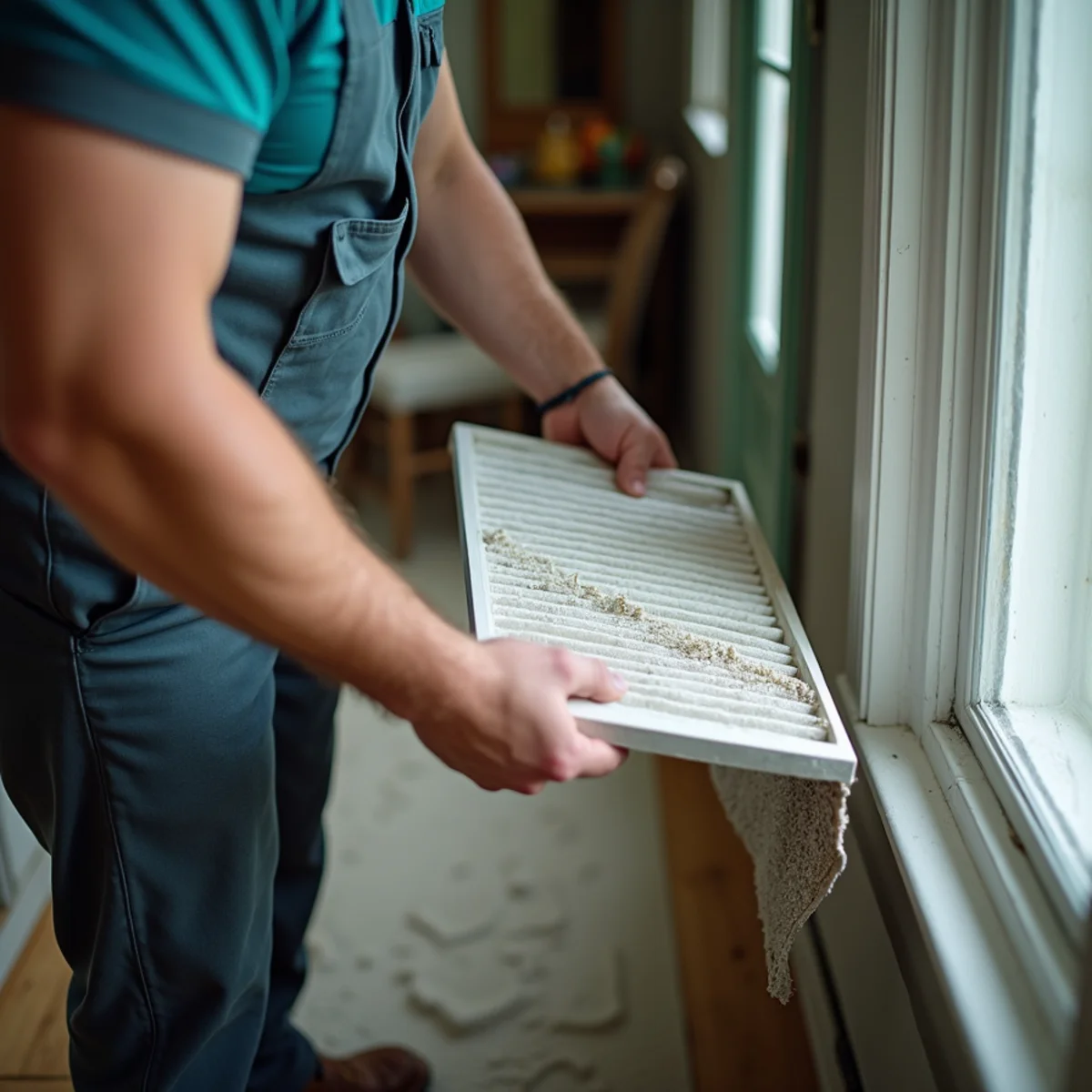
Gravel roads, farm dust, and pets mean rural Pulaski County homes need more frequent filter changes. Here's a realistic schedule and the right MERV rating.
Rural Homes Get Dusty Fast
For a rural Pulaski County home, plan on changing a standard 1-inch filter every 30 to 60 days, closer to 30 if you have pets or live on a gravel road, rather than the 90 days the package suggests. Thicker 4- to 5-inch media filters last longer, three to six months, but you should still eyeball them monthly. When you cannot see light through the filter, it is done.
The 90-day rule is a fine starting point for a tidy suburban house, but it often is not enough out here. Gravel and dirt roads kick up dust, farm fields and pollen fill the air, wood stoves add particulates, and country homes frequently have pets that shed. All of that ends up in your filter, and it loads up faster than the package assumes.
Changing your filter on the right schedule is one of the cheapest, highest-impact things you can do for your HVAC system and your air quality. Let us get specific about how often and why it matters so much out here.
A Realistic Schedule for Country Homes
Rather than a one-size-fits-all number, think in terms of your home's conditions. The dustier your environment and the more people and pets in the house, the more often you should change it. Check your filter monthly by holding it up to the light, if you cannot see through it, replace it.
Here is a practical guideline for rural homes. When in doubt, check more often, especially during heavy-use heating and cooling seasons when the system runs constantly.
- Standard 1-inch filters in a dusty rural home: every 30 to 60 days.
- Homes with pets or near gravel roads and fields: closer to every 30 days.
- Thicker 4- to 5-inch media filters: every 3 to 6 months, but check monthly.
- During peak summer and winter use: check monthly regardless.
- After dusty events like nearby field work or road grading: check sooner.
Understanding MERV Ratings
Filters are rated by MERV, which measures how well they capture particles, higher MERV catches smaller particles. It is tempting to grab the highest-rated filter for the cleanest air, but that can backfire. A filter that is too restrictive for your system chokes airflow, making the system work harder, run less efficiently, and potentially overheat or freeze up.
For most homes, a filter in the MERV 8 to 13 range balances good filtration with healthy airflow. If someone in the home has allergies or asthma, a higher rating helps with air quality, but it should be matched to what your system can handle. Our indoor air quality team can recommend the right filter for your specific system and needs.
The Static Pressure Trap
Here is the part the filter aisle does not tell you: a 1-inch MERV 13 filter can add so much resistance that it starves your blower. The measure for this is static pressure, the push the blower fights against, and most residential systems are designed for a fairly low number. Cram in a dense, high-MERV 1-inch filter and you can push static pressure past what the system was built for, which cuts airflow, freezes coils in summer, overheats furnaces in winter, and wears out the blower motor. If you want serious filtration, the right answer is usually a thick 4- to 5-inch media cabinet, which delivers high MERV with far less resistance, not a super-dense 1-inch filter.
Getting the Basics Right When You Swap It
A filter only works if it is installed and sized correctly, and this is where we see avoidable mistakes on service calls. A filter that is the wrong size, or is loose in the slot, lets dusty air slip around the edges unfiltered, which defeats the point and lets grime build on the coil and blower.
A couple of simple habits keep it working the way it should, and they take about a minute at swap time.
- Match the size printed on the old filter exactly, and make sure it seats snugly with no gaps.
- Install it with the airflow arrow pointing toward the furnace or air handler, not away.
- Write the date on the filter frame so you know when it went in.
- Keep a few spares on hand so a full filter actually gets changed, not left another month.
- If a fresh filter darkens fast, that is a sign of a duct leak pulling in crawlspace or attic dust.
What a Dirty Filter Costs You
Letting a filter go too long is a false economy. A clogged filter restricts airflow, which forces your system to work harder and use more energy, raising your bills. It can cause the AC coil to freeze in summer or the furnace to overheat and short-cycle in winter. And it lets more dust circulate through your home and settle on the equipment, shortening its life.
In short, a two-dollar filter changed on time protects a very expensive system and keeps your air cleaner. It is the easiest maintenance win there is. Regular HVAC maintenance handles the deeper care, but filter changes are the part that is on you between visits. We serve homeowners across the rural county, including out toward Woodstock.
Questions About Filters? Ask Us
Not sure how often to change your filter or which MERV rating is right for your system? Call HVAC Somerset KY at +1 (327) 210-5999 and we will help you set up a simple schedule and pick the right filter for your rural home. We are a local family business, and we would rather help you protect your system with a good filter habit than fix a breakdown a dirty filter caused.
Quick Answers
Frequently Asked
More often than the standard 90 days. For a 1-inch filter in a dusty environment with pets or near gravel roads, every 30 to 60 days is realistic. Check it monthly and replace it when you cannot see light through it.
Not necessarily. A filter that is too restrictive for your system chokes airflow and can cause it to freeze or overheat. MERV 8 to 13 balances filtration and airflow for most homes; match it to your system.
Yes. A clogged filter restricts airflow, which can freeze the AC coil, overheat the furnace, raise your bills, and shorten the system's life. A cheap filter changed on time protects an expensive system.
Often yes, if your system has or can add the cabinet for one. A 4- to 5-inch media filter delivers high filtration with far less airflow resistance than a dense 1-inch filter, and it only needs changing every three to six months. We can tell you whether your system supports one.
It can. Wood smoke and ash add fine particulates that load a filter faster, so a home with a wood stove or fireplace running through winter should check the filter monthly and expect to change it more often during heating season.
Need a hand from a real Somerset tech?
Same-day service across Pulaski County — 24/7 emergency dispatch, nights, weekends & holidays.
Related Services
How We Can Help
Serving


