
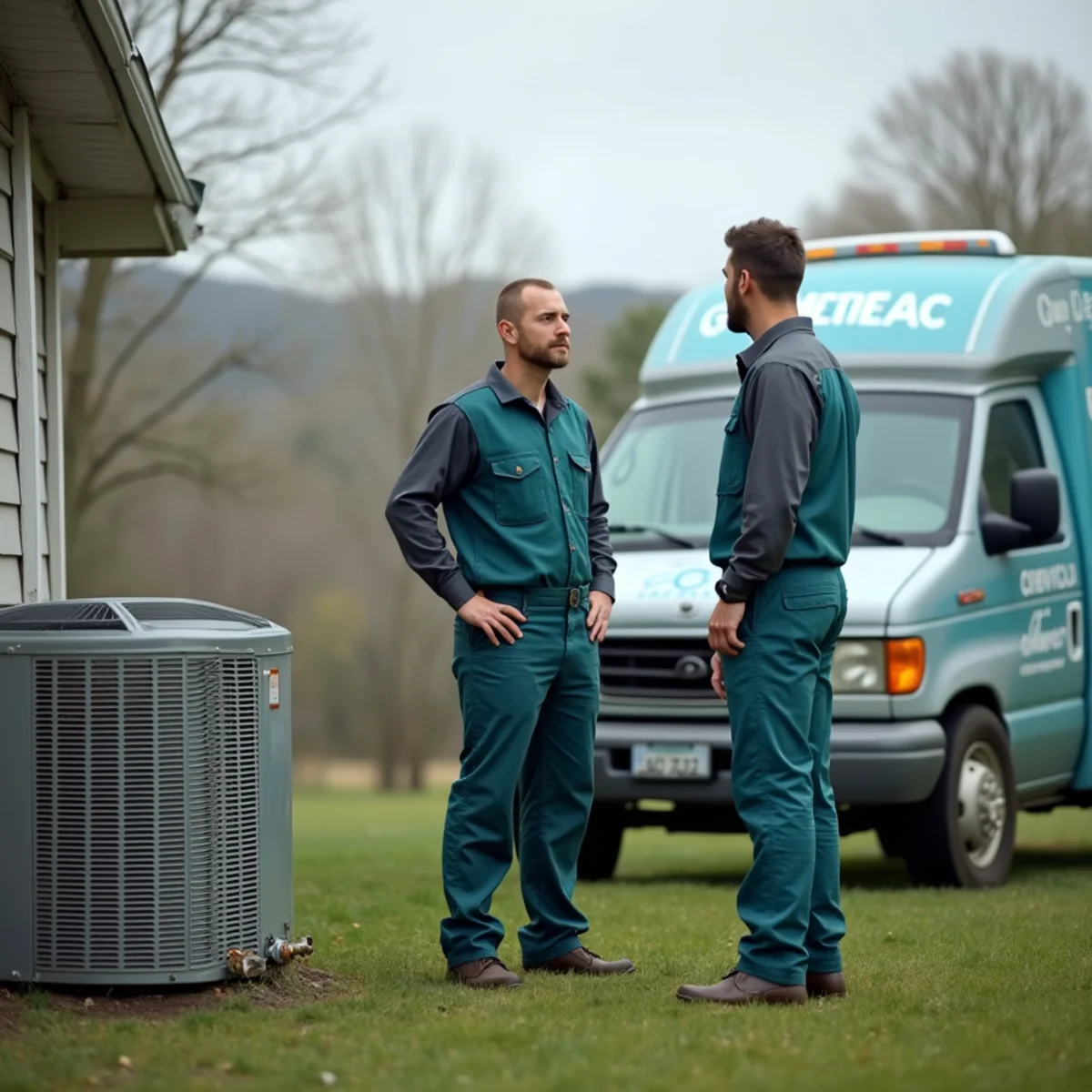
Many rural Pulaski County homes have no natural gas line. Here are your real heating options and how to choose among them.
Off the Gas Grid Is Normal Here
Without a natural gas line, your main heating options in rural Pulaski County are a propane furnace, an electric heat pump, a dual-fuel heat pump with propane backup, or electric resistance heat. For most homes a heat pump or dual-fuel system costs the least to run over a winter, while straight propane and electric resistance heat are usually pricier.
If your rural Pulaski County home has no natural gas line, you are far from alone. Much of our county sits off the gas grid, so a large share of homeowners here heat without it. The good news is you have several solid options, each with its own trade-offs in up-front cost, operating cost, and comfort. Choosing well can save you real money every winter.
Let us walk through the main ways to heat a home without natural gas, from the familiar to the most efficient, so you can figure out what fits your home and budget.
Propane Heating
Propane is the most common gas-line alternative around here. A propane furnace works much like a natural gas one, burning fuel from an on-site tank to produce very warm air, and it is reliable even on the coldest nights. Many rural homes already have a propane tank for heating, cooking, or a water heater.
The catch is operating cost. Propane prices swing with the market, and heating a home with propane through a long Kentucky winter can get expensive. It is dependable and familiar, but for many homes it is not the cheapest way to stay warm over a full season.
Heat Pumps and Dual-Fuel Systems
A heat pump is often the most economical choice for off-grid homes. Rather than burning fuel, it moves heat, making it very efficient in our mild-to-moderate winters, and it doubles as your air conditioner in summer. For a home currently on propane or old electric resistance heat, the savings can be substantial.
The most popular setup we install for rural homes is dual-fuel: an efficient heat pump paired with a propane furnace backup. The heat pump handles most of the winter cheaply, and the propane only kicks in on the coldest nights. Our propane and dual-fuel heating systems give off-grid homes the best of both, low operating cost most of the season with reliable backup when it is bitter out.
- Heat pump: highly efficient, also provides summer cooling.
- Dual-fuel: heat pump plus propane backup for the coldest nights.
- Straight propane: reliable and familiar but pricier to run.
- Electric resistance: simple but usually the most expensive to operate.
Choosing What's Right for Your Home
The best option depends on your home, your budget, and your priorities. If up-front cost is the main concern and your heating needs are modest, propane may fit. If you want the lowest winter bills and value having efficient AC in one system, a heat pump or dual-fuel setup usually wins over the long run despite the higher install cost.
Your home's insulation, ductwork, and heat load all factor in, which is why we run a proper Manual J calculation rather than guessing. We help homeowners across the rural county, from Shopville to Ruth, find the heating setup that keeps them warm without overpaying.
The Honest Case Against Electric Resistance
Many off-grid homes still run electric resistance heat, either baseboard heaters or the strip heat inside an air handler, and it is worth understanding why it is usually the most expensive option to operate. Resistance heat is 100 percent efficient in the narrow sense that every watt becomes heat, but it makes only one unit of heat per unit of electricity. A heat pump moves heat instead of making it, so in our mild-to-moderate winters it can deliver two to three units of heat for the same electricity, which is why the bills are so different.
That is exactly why we so often recommend converting a resistance-heated home to a heat pump. The catch is the coldest nights, when a heat pump loses capacity, and that is where a dual-fuel setup with propane backup, or a right-sized cold-climate heat pump, earns its place. We size everything with a Manual J load calculation rather than replacing like-for-like, because guessing at capacity is how homes end up either freezing on the coldest nights or paying for equipment they do not need.
- Electric resistance makes one unit of heat per unit of electricity.
- A heat pump moves heat and delivers two to three units in mild weather.
- Cold-climate heat pumps hold capacity further into a Kentucky cold snap.
- Dual-fuel covers the coldest nights with propane backup.
- A Manual J load calculation sizes the system to your actual home.
Rebates and Getting the Install Right
Efficiency upgrades often come with help. High-efficiency heat pumps have qualified for utility incentives, and South Kentucky RECC has historically run rebate programs on qualifying equipment, worth confirming before you buy since amounts change year to year. Federal incentives for heat pumps also come and go, so it pays to ask what is current when you are ready.
Whatever you choose, the install decides whether you are satisfied. Correct sizing, sealed and insulated ducts, and a properly matched system all matter more than the brand on the cabinet. Our heat pump services and furnace installation teams handle off-grid homes across the county, and seasonal HVAC maintenance keeps whatever you install running efficiently and under warranty.
Let's Find Your Best Heating Option
Heating without natural gas does not mean settling for high bills, the right system can keep you warm and save you money. Call HVAC Somerset KY at +1 (327) 210-5999 for an honest look at your propane, heat pump, and dual-fuel options. We are a local family business that heats a lot of off-grid Pulaski County homes, and we will help you choose the setup that fits your home and your budget for the long haul.
Quick Answers
Frequently Asked
For most homes, an efficient heat pump or a dual-fuel system costs the least to run over a winter. Straight propane and electric resistance heat are usually more expensive to operate. The best fit depends on your home.
Often it can handle the bulk of the season, but on the coldest Kentucky nights a backup helps. That is why dual-fuel, a heat pump with propane backup, is so popular for off-grid homes here.
For many homes, yes, the winter savings offset the install over time, plus you gain efficient summer cooling. We will run the numbers for your home so you can decide. Call +1 (327) 210-5999.
Because it makes only one unit of heat per unit of electricity. A heat pump moves heat rather than generating it, delivering two to three units for the same power in our mild winters. That efficiency gap is why converting from baseboard or strip heat to a heat pump usually lowers your bills.
Often, yes. South Kentucky RECC has offered rebates on qualifying high-efficiency heat pumps, and federal incentives are sometimes available too. Programs and amounts change year to year, so confirm what is current before buying. Call +1 (327) 210-5999 and we will point you in the right direction.
Need a hand from a real Somerset tech?
Same-day service across Pulaski County — 24/7 emergency dispatch, nights, weekends & holidays.
Serving


