
Heat pump air feels cooler than a furnace, and that's often normal. But sometimes cold air means a real problem. Here's the difference.
Heat Pumps Just Feel Different
It is often normal. A heat pump delivers a large volume of gently warm air in the 90s, cooler than a furnace but warmer than your skin, and it blows cool on purpose during a brief defrost cycle. It is only a problem when the air stays cold and the house never reaches your set temperature.
If you switched from a gas or propane furnace to a heat pump, the air from your vents can feel disappointingly cool at first, and that is often completely normal. A furnace blasts air at 120 to 140 degrees, well above body temperature, so it feels hot. A heat pump delivers a larger volume of gently warm air, typically in the 90s, which is warmer than your skin but can feel cool by comparison.
So step one is understanding what normal feels like for a heat pump. As long as the house is reaching and holding your set temperature, cooler-feeling air is not a malfunction. But there are cases where cold air genuinely signals a problem, and it helps to tell them apart.
The Defrost Cycle Explanation
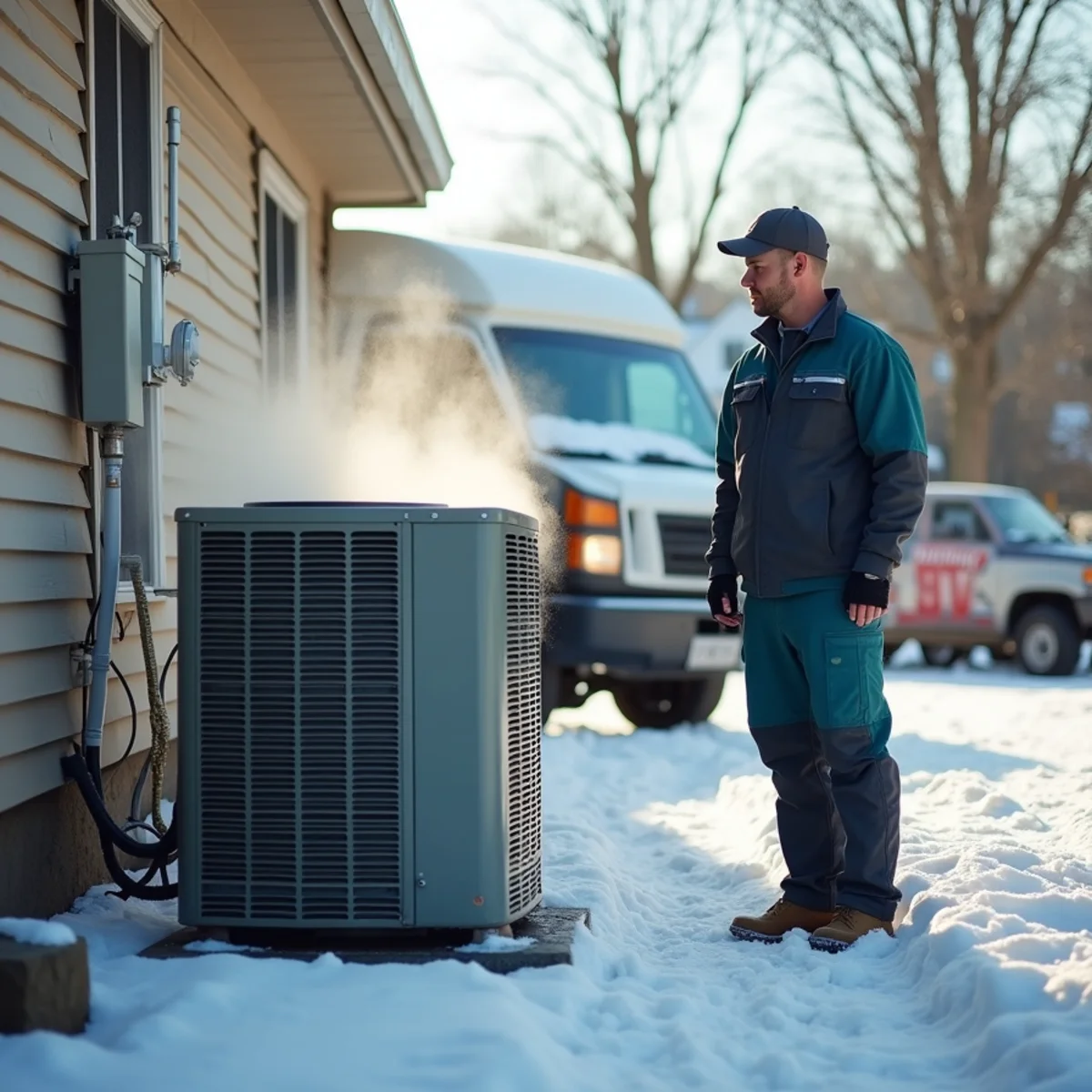
Here is a normal situation that surprises people: during a defrost cycle, your heat pump briefly blows cool air on purpose. In cold, damp Kentucky weather, frost builds on the outdoor coil, so the system periodically reverses to melt it. During those few minutes, indoor air feels cool and you may see steam rising from the outdoor unit.
This is entirely normal and lasts only a few minutes before normal heating resumes. Many heat pumps run the backup heat during defrost to offset the cool feeling, but not all do. If your air turns cool for a short time and then warms back up, you are almost certainly just watching a defrost cycle.
When Cold Air Is a Real Problem
Now the cases that need attention. If your heat pump is blowing genuinely cold air continuously, and the house is not reaching temperature, something is wrong. The most common real problems are worth knowing.
A stuck reversing valve can leave the system running in cooling mode when it should be heating. Low refrigerant from a leak steals the system's ability to produce heat. And if the outdoor unit is iced over solid because the defrost cycle failed, it cannot pull heat from the air. Our heat pump services team diagnoses each of these.
- Continuous cold air with the house never reaching temperature.
- A stuck reversing valve keeping the system in cooling mode.
- Low refrigerant from a leak, reducing heat output.
- The outdoor unit frozen into a solid block of ice.
- Failed backup heat, so the system cannot supplement on cold days.
Quick Checks Before Calling
If your heat pump is blowing cool air, a couple of checks help. Confirm the thermostat is set to Heat, not Cool or Emergency Heat left on by accident. Check the outdoor unit for a heavy coat of ice. And note whether the cool air is constant or just occasional (a sign of normal defrost).
If the house is genuinely not warming and the air stays cold, it is time for a professional. We serve homeowners from Somerset out to Eubank and neighborhoods like Oak Valley Estates, and we will find out whether it is a reversing valve, a refrigerant issue, or something else.
What We Look At Under the Hood
Diagnosing a heat pump that will not heat means understanding how it switches between heating and cooling. The reversing valve is the heart of it: an electric solenoid slides a valve that decides which direction refrigerant flows. When that solenoid or valve sticks, the system can get stuck in cooling mode in January, which is why the air feels genuinely cold. We energize and test the valve directly rather than assuming.
The defrost board and its sensor are the next suspects. In our damp Cumberland winters, frost builds fast on the outdoor coil, and the board is supposed to reverse the system briefly and often bring on the auxiliary heat strips to temper the cool air. If the defrost sensor or board fails, the coil ices into a solid block and heating collapses. We also check the thermostat's O/B reversing-valve setting and the aux-heat wiring, because a miswired thermostat after a replacement is a surprisingly common cause of cold air.
- Reversing valve and solenoid, tested by energizing the coil, not by guessing.
- Defrost board and defrost sensor timing on the outdoor unit.
- Auxiliary and emergency heat strips and their sequencer or relays.
- Refrigerant charge by superheat and subcooling, low charge kills heat output.
- Thermostat O/B configuration and aux-heat wiring after any recent swap.
When Emergency Heat Is the Right Move
If your outdoor unit is a solid block of ice and the house is dropping into the 50s, switching the thermostat to Emergency Heat locks out the heat pump and runs the backup heat alone. That keeps you warm and gives the outdoor coil a chance to thaw instead of grinding against ice.
Emergency Heat is a stopgap, not a fix, and it is expensive to run because it leans entirely on resistance strips or the furnace. If you have needed it more than briefly, the underlying defrost or charge problem needs attention. When it is a genuine no-heat night, our 24/7 emergency HVAC team can get you running, and a seasonal heat pump tune-up is the best way to keep the defrost system and backup heat ready before winter.
Not Sure? Let's Check It
It can be genuinely hard to tell normal heat pump behavior from a real fault, and that is fine, that is what we are here for. If your home is not staying warm and the air feels cold, call HVAC Somerset KY at +1 (327) 210-5999. We will tell you honestly whether your heat pump is working as designed or needs a repair. We are a local family business, and we would rather reassure you for free than have you shiver through a Kentucky winter wondering.
Quick Answers
Frequently Asked
Heat pumps deliver a larger volume of gently warm air, usually in the 90s, rather than the very hot air a furnace produces. It feels cooler but still heats your home. As long as the house reaches temperature, it is normal.
No, that is almost certainly a defrost cycle melting frost off the outdoor coil. It is normal, lasts a few minutes, and you may see steam outside. Normal heating resumes right after.
When the air stays continuously cold and the house never reaches your set temperature. That can mean a stuck reversing valve, low refrigerant, or a frozen unit. Call +1 (327) 210-5999 for a diagnosis.
Yes, temporarily. Switching to Emergency Heat locks out the heat pump so the outdoor coil can thaw while backup heat keeps you warm. It costs more to run, so use it as a stopgap and have the defrost system checked. If it keeps icing up, call +1 (327) 210-5999.
A miswired O/B reversing-valve terminal is a common culprit. If the thermostat tells the reversing valve to energize in the wrong mode, the system runs cooling when it should heat. It is usually a quick configuration fix once we confirm the wiring against your equipment.
Need a hand from a real Somerset tech?
Same-day service across Pulaski County — 24/7 emergency dispatch, nights, weekends & holidays.
Related Services
How We Can Help
Serving


