
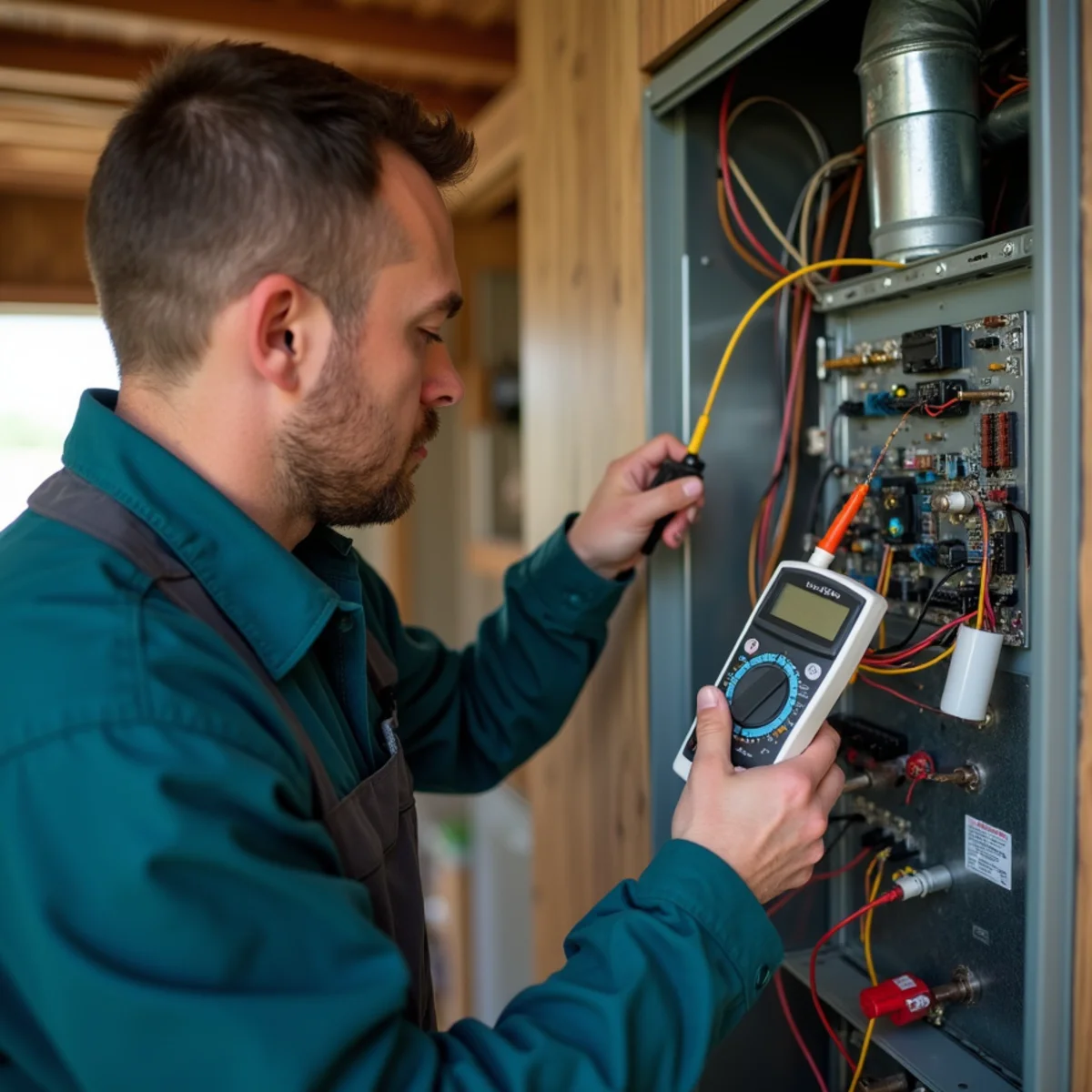
A furnace that clicks on and off every few minutes is short-cycling, here's what causes it and why it needs attention.
What Short-Cycling Actually Means
A furnace short-cycles when it fires, runs only a few minutes, shuts off, and restarts again soon after, over and over. The most common causes are a clogged filter overheating the furnace, a dirty flame sensor, a thermostat placed in a bad spot, or a furnace that was oversized for the home. Start with the filter.
If your furnace fires up, runs for a couple of minutes, shuts off, and then starts again a short while later, over and over, that is short-cycling. A healthy furnace runs in longer, steady cycles that heat the home evenly. Short-cycling means the system keeps interrupting itself before it finishes the job.
It is more than an annoyance. Short-cycling wears out components faster, drives up your energy bills, and leaves rooms unevenly heated. It is also usually a symptom of something that needs correcting, so it is worth understanding the causes.
The Overheating Problem
One of the most common causes is the furnace overheating and shutting itself down to protect itself. When airflow is restricted, heat builds up around the heat exchanger, and a safety limit switch cuts the burners off. Once it cools, it fires again, and the cycle repeats.
The usual airflow culprits are simple, which is good news. A clogged filter is the number one cause, so replacing it is always the first thing to try.
- A dirty air filter choking airflow, replace it first.
- Blocked or closed supply vents and registers.
- A dirty blower wheel or restricted return ducts.
- An oversized furnace that heats the space too fast, then shuts off.
Other Causes Worth Knowing
Beyond overheating, several other issues cause short-cycling. A malfunctioning thermostat, or one placed in a bad spot like near a heat source or in direct sun, can misread the temperature and cycle the furnace incorrectly. A dirty or failing flame sensor can shut the burners down prematurely, causing repeated restarts.
An oversized furnace is a trickier cause. If a previous owner or installer put in a unit that is too big for the home, it blasts out heat, satisfies the thermostat quickly, and shuts off, then repeats. That is why correct sizing with a Manual J calculation matters so much. Our furnace repair team can pinpoint which of these is behind your short-cycling.
Why You Shouldn't Ignore It
Short-cycling puts real strain on your furnace. Each start-up is the hardest moment on the components, so a furnace that starts dozens of extra times a day ages far faster and is more likely to fail on a cold night. It also burns fuel inefficiently and leaves your home unevenly heated.
Regular HVAC maintenance catches many of these issues before they cause short-cycling in the first place, dirty filters, failing sensors, and airflow problems all show up during a tune-up. We keep systems running smoothly for homeowners across Somerset, including out in Cedar Grove.
The Flame Sensor and Limit Switch: A Closer Look
Two parts cause more short-cycling calls than almost anything else, and both are cheap. The flame sensor is a thin metal rod that sits in the burner flame and confirms the furnace actually lit. Over a few seasons it coats with a whitish oxide film, and once it can no longer sense the flame, the control board shuts the gas off within seconds as a safety measure, then tries again. The result is a furnace that lights, runs a moment, and drops out repeatedly.
The high-limit switch is the other frequent offender. It watches the temperature around the heat exchanger and cuts the burners if things get too hot, which is what protects a cracked or overheating heat exchanger from becoming dangerous. When airflow is choked, that switch trips again and again. Cleaning a flame sensor is minor; a limit switch tripping on real overheating is a warning we take seriously, because a compromised heat exchanger can leak carbon monoxide.
- Flame sensor: a filmed-over rod fails to prove the flame, dropping the burners in seconds.
- High-limit switch: trips on overheating, usually from restricted airflow.
- Rollout switch: trips if flames roll out of the burner box, never reset this without a diagnosis.
- Pressure switch: a blocked flue or condensate drain can keep it from closing.
- Control board and thermostat wiring: intermittent faults that mimic sensor problems.
How We Diagnose It Step by Step
Rather than swapping parts and hoping, we follow the furnace's own sequence of operation and watch where it fails.
- 1. Measure static pressure to confirm whether airflow is the root cause.
- 2. Watch the ignition sequence and time exactly when the burners drop out.
- 3. Test the flame sensor's microamp signal and clean or replace as needed.
- 4. Verify the limit and pressure switches and inspect the heat exchanger.
- 5. Check the thermostat location, calibration, and the furnace's rated size against a Manual J load.
Get to the Bottom of It
If your furnace is short-cycling, start by replacing the filter and checking your vents. If it keeps happening, do not let it run itself into an early grave, call HVAC Somerset KY at +1 (327) 210-5999. We will diagnose the real cause, whether it is airflow, a sensor, the thermostat, or a sizing problem, and fix it right. And if it quits entirely on a cold night, our no-heat emergency team covers all of Pulaski County. We are a local family business, and we want your furnace running efficiently for many winters to come.
Quick Answers
Frequently Asked
Mostly it is hard on the furnace, causing extra wear, higher bills, and uneven heating. But if it stems from overheating, it is worth fixing promptly, since repeated overheating can damage the heat exchanger. Call +1 (327) 210-5999 if it persists.
Yes, very commonly. A clogged filter restricts airflow, the furnace overheats, and a safety switch shuts it down until it cools. Always replace the filter first, it is the cheapest possible fix.
An oversized furnace heats too fast, satisfies the thermostat, and shuts off, then repeats. There is no quick fix, but proper sizing on the next replacement solves it. We use Manual J calculations to size correctly.
Yes, and it is one of the most common causes we see. A filmed-over flame sensor cannot confirm the burner lit, so the control board shuts the gas within seconds and retries, producing rapid on-off cycling. Cleaning or replacing the sensor is an inexpensive, routine fix.
It can be a warning sign. If the limit switch keeps tripping because the furnace is overheating, the heat exchanger is under stress, and a cracked heat exchanger can leak carbon monoxide. That is why persistent short-cycling should be inspected promptly. Keep working CO detectors and call +1 (327) 210-5999.
Need a hand from a real Somerset tech?
Same-day service across Pulaski County — 24/7 emergency dispatch, nights, weekends & holidays.
Related Services
How We Can Help
Serving


