
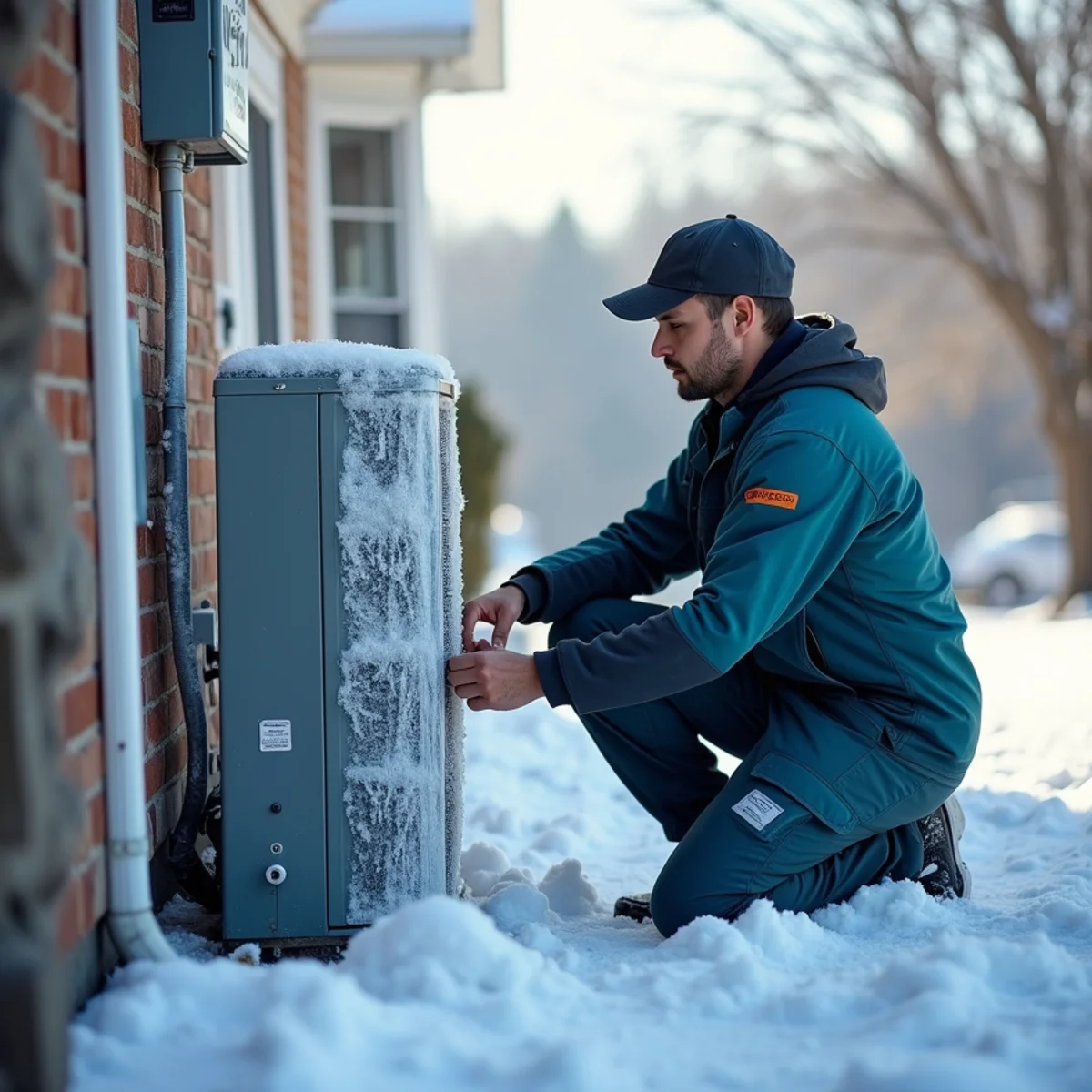
A little frost on your heat pump is normal in a Kentucky winter, but a solid block of ice is a problem. Here's how to tell.
Some Frost Is Normal, a Block of Ice Is Not
A light coating of frost on your heat pump is normal in a Kentucky winter and clears on its own during the defrost cycle. It becomes an emergency when the coil, fan, or whole cabinet turns into a solid block of ice, the house stops holding temperature, or the ice keeps coming back within a day of thawing, which points to a failed defrost system.
Heat pumps pull warmth out of cold outdoor air, and in the process the outdoor coil gets cold enough to collect frost. On a damp Somerset morning in the 20s or 30s, a light coating of frost on the unit is completely normal. Your heat pump is built for it and runs a defrost cycle every so often to melt it off, briefly blowing a little cool air indoors and sometimes sending up a puff of steam outside.
The problem is when frost becomes a thick, solid casing of ice that covers the coil, the fan blades, or the whole cabinet. That means the defrost cycle is not keeping up, and a fully iced unit cannot absorb heat, so your home slowly gets colder while the system runs itself ragged.
Why Heat Pumps Ice Over in Kentucky
Our winters are a mix of freezing rain, wet snow, and swings above and below freezing, which is exactly the recipe for heat pump icing. When the defrost system fails or the unit is starved for airflow, ice builds faster than it can melt. The common causes are worth knowing so you can catch trouble early.
If you have tried the safe fixes and the ice keeps coming back, our heat pump services team can diagnose the defrost board, sensor, or refrigerant issue behind it.
- A failed defrost control board or defrost sensor that never triggers a melt cycle.
- Low refrigerant charge, often from a slow leak, that drops coil temperature too far.
- Blocked airflow from leaves, snow drift, or a unit set too low to the ground.
- A stuck reversing valve that keeps the system from switching into defrost mode.
What You Can Safely Do Yourself
Before you call anyone, there are a couple of safe steps. If the unit is lightly iced, switch the thermostat to emergency heat (this uses your backup electric or furnace heat and gives the outdoor coil a chance to thaw). You can also gently pour lukewarm, never hot, water over the ice to melt it. Never chip, scrape, or pick at ice on the coil, the fins and refrigerant lines are thin and easy to puncture.
Also clear the area around the unit. Rake away leaves, brush off snow, and make sure nothing is blocking airflow. If the ice returns within a day, the defrost system likely needs professional attention.
- Switch to emergency or auxiliary heat to keep the house warm and let the coil thaw.
- Melt light ice with lukewarm water only, never hot water or sharp tools.
- Clear snow, leaves, and debris from around and on top of the unit.
- Turn the system off if the ice is severe and call for service.
When It's an Emergency
If your home is losing heat, the unit is a solid block of ice, or ice keeps returning after you thaw it, that is the point to call for help rather than let it run. A heat pump forcing itself against a frozen coil can damage the compressor, the most expensive part of the system, and a no-heat night in a Kentucky February is not one to gamble on.
Our no-heat emergency service covers Somerset and out to communities like Eubank. We will find out why the defrost cycle failed and get your heat back before the damage spreads.
How the Defrost Cycle Actually Works
Understanding the defrost cycle helps you tell a healthy heat pump from one that is failing. A working system does not ignore frost, it actively melts it on a schedule and by sensor.
Every so often the defrost control board reverses the system into cooling mode for a few minutes, sending hot refrigerant out to the frozen coil while the outdoor fan shuts off. The coil warms, the ice melts and drains, and the system flips back to heating. That is the burst of steam you sometimes see on a cold morning, and it is completely normal.
When ice keeps building, one link in that chain has broken. The defrost sensor may not be reading coil temperature, the board may not be timing the cycle, or the reversing valve may be stuck so the system cannot flip. A low refrigerant charge also drops the coil so cold that frost outruns the melt. These are the failures our technicians isolate, rather than just thawing the surface and leaving the cause in place.
- Defrost sensor: tells the board how cold the coil is; a bad one skips the melt cycle.
- Defrost control board: times and triggers defrost; a failed board lets ice build.
- Reversing valve: flips the system into defrost; if stuck, the coil never warms.
- Refrigerant charge: low charge drops coil temperature and outpaces normal defrost.
Keeping Your Heat Pump Ice-Free Next Winter
Most emergency icing calls trace back to something a fall tune-up would have caught. A technician verifies the defrost cycle, checks the refrigerant charge, clears the coil, and makes sure the unit sits high enough that snowmelt drains away instead of refreezing under it. Annual HVAC maintenance is the cheapest insurance against a no-heat night in January.
There is a homeowner side too. Keep the outdoor unit clear of leaves and drifted snow, do not stack anything against it, and make sure the pad has not settled into a low spot that collects water. We service heat pumps across the county, from Somerset out through Pulaski County, and a quick seasonal check goes a long way in our freeze-thaw climate.
Call Before a Frozen Coil Costs You a Compressor
A frozen heat pump rarely fixes itself, and running it iced over is the fastest way to a big repair bill. If you have thawed the unit and it ices right back up, or the house is not holding temperature, call HVAC Somerset KY at +1 (327) 210-5999. We are local, we understand how our freeze-thaw winters punish heat pumps, and we will get to the root cause instead of just melting the symptom. Keep our number close through the cold months.
Quick Answers
Frequently Asked
Yes. Light frost on the outdoor coil is normal in Kentucky winters, and the defrost cycle clears it automatically. A thick, solid coating of ice over the coil or fan is not normal and needs attention.
Use lukewarm water, not hot. Hot water on a very cold coil can cause damage, and you should never chip or scrape ice off, as the fins and lines puncture easily.
Recurring ice usually points to a failed defrost board or sensor, low refrigerant, or a stuck reversing valve. These need professional diagnosis, call +1 (327) 210-5999 before the compressor is damaged.
In damp, near-freezing weather it may defrost every 30 to 90 minutes for a few minutes at a time, which is normal. If your unit runs defrost constantly or never seems to melt the ice, the defrost sensor or board likely needs attention, call +1 (327) 210-5999.
Neither is a real fix. Emergency heat costs more to run but protects the compressor while the coil thaws. Letting a heat pump grind against a frozen coil risks a costly compressor failure, so use emergency heat and get the defrost problem diagnosed.
Need a hand from a real Somerset tech?
Same-day service across Pulaski County — 24/7 emergency dispatch, nights, weekends & holidays.
Related Services
How We Can Help
Serving


