
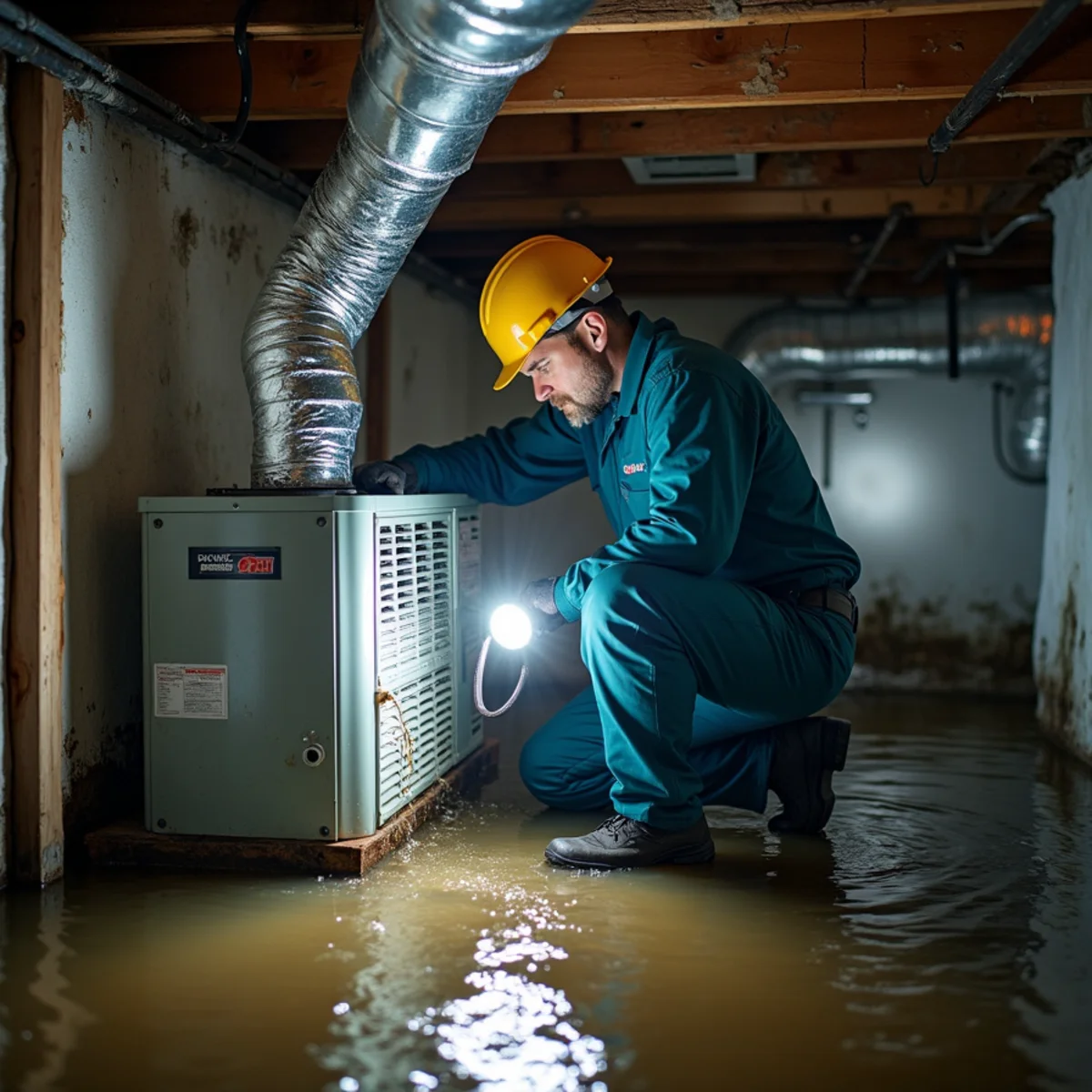
After a Kentucky storm floods your crawlspace, quick action can save some HVAC components, but submerged motors, gas valves, and duct insulation must be replaced for safety.
When Storm Water Reaches Your HVAC
Here is the short answer: HVAC parts that only got damp near the water line can often be cleaned, dried, and saved, but anything actually submerged, blower and inducer motors, gas valves, control boards, contactors, and duct insulation, must be replaced for safety. Never restore power until a technician has inspected the equipment.
Kentucky's heavy storms and flash flooding can send water into crawlspaces and basements fast, and when they do, any HVAC equipment down there is at risk. With Pulaski County averaging around 53 inches of rain a year and periodic flash-flood warnings off the Cumberland watershed, crawlspace flooding is not rare here. Ductwork, air handlers, and furnaces installed low in a crawlspace can be soaked or submerged, and water damage to HVAC is not something you can just dry out and ignore.
Knowing the difference between salvageable and ruined protects both your wallet and your family. Here is how to think about HVAC after your crawlspace floods, from the first safety steps to preventing it next time.
Safety First, Always
Before anyone goes near flooded HVAC equipment, safety comes first. Do not touch or operate electrical equipment that has been in water, standing water and electricity are a deadly combination. If your air handler, furnace, or the electrical connections were submerged, shut off power to that equipment at the breaker before anyone approaches, and if you are unsure, wait for a professional.
Do not try to run a flooded system to see if it works. Powering water-damaged equipment risks electrical shock, fire, and turning a repairable situation into a destroyed unit. Get it assessed first.
- Never touch or operate electrical HVAC equipment that has been in water.
- Shut off power at the breaker to any submerged equipment.
- Do not run a flooded system to test it.
- Wait for a professional assessment before restoring power.
What Can Be Saved and What Can't
Whether a component survives depends on what it is and how deep the water reached. The dividing line technicians use is the water line, the highest mark the flood left, plus a margin, because splashing and wicking carry moisture higher than the standing level. Anything below that line gets scrutinized hard.
Our storm HVAC damage repair and ductwork services teams assess exactly what is safe to keep, and we will not sign off on a submerged gas or electrical component just to save you money, because that is how you get a carbon monoxide leak or a fire six months later.
Ductwork and Insulation
Flexible duct and any fiberglass duct insulation that went underwater almost always needs replacement. It traps water in its layers, cannot be reliably dried, and flood water is rarely clean, it carries sediment, sewage, fuel, and bacteria that turn wet insulation into a mold farm and a genuine health hazard. Sheet metal duct may be salvageable if it was only lightly affected and can be fully cleaned, disinfected, and dried, but the insulation lining or wrap on it is usually a loss.
Motors, Controls, and Gas Components
Submerged blower motors, inducer motors, capacitors, contactors, circuit boards, gas valves, and igniters are replaced, not dried out. Water leaves mineral residue and corrosion inside windings and on contacts that keeps causing failures long after the unit looks dry. Manufacturers void warranties on flood-submerged equipment, and both code and common sense call for replacing any gas control that was underwater, a corroded gas valve that sticks open is not a risk worth taking.
What Our Technicians Actually Check
A proper post-flood assessment is more than a glance. When we evaluate a flooded system, we are looking for the quiet damage that turns into a callback or a hazard months down the road, not just the obvious stuff.
This is the difference between a real inspection and someone hosing off the unit and calling it good. Honest evaluation sometimes means telling you the furnace has to go, and sometimes it means saving you money by confirming the water stopped short of the important parts.
- The exact water line versus the height of the burners, gas valve, and control board.
- Corrosion and mineral residue inside the blower housing and on electrical terminals.
- Moisture trapped in duct insulation, checked with a meter, not a guess.
- Condensate drain and crawlspace grade, since a system that flooded once will flood again.
- Signs of mold growth on duct board and cabinet insulation, which starts within 24 to 48 hours of standing water.
Documentation and Insurance
Before you clean anything up, photograph the standing water and the water line on the equipment, and record model and serial numbers. Many homeowner and flood policies cover storm-related HVAC damage, but adjusters want proof of the water level and the equipment involved. Keep damaged parts until the adjuster has seen them.
A written assessment from a licensed technician documenting what was submerged and why it must be replaced carries real weight with an insurer. We provide that documentation as a standard part of storm work, so your claim is not fighting a he-said-she-said over whether a motor needed replacing.
Preventing the Next Flood's Damage
Once you have recovered, it is worth reducing the risk next time. A crawlspace that flooded once sits in a low spot that will collect water again, so the goal is to keep future water away from the equipment and to keep the crawlspace dry between events.
- Elevate the air handler or furnace on a stand or platform above the expected flood level.
- Improve grading and drainage so surface water runs away from the foundation, not toward it.
- Add a sump pump with a battery backup for when the storm also takes the power.
- Install a proper vapor barrier and, where warranted, encapsulate the crawlspace to control ground moisture.
- In chronically flood-prone spots, relocate vulnerable equipment higher, sometimes the best long-term fix.
Why the Moisture Matters After the Water Is Gone
Even after the standing water drains, a damp crawlspace keeps working against your system. Kentucky's humid air and roughly 53 inches of annual rain leave crawlspaces prone to lingering dampness, and that moisture drives the slow corrosion of coils, cabinets, and electrical terminals, plus the mold growth that causes musty smells upstairs.
Controlling crawlspace moisture, keeping relative humidity in a reasonable range with a vapor barrier and drainage, protects the HVAC you just repaired or replaced. We help homeowners across the region, including out toward Monticello and throughout Pulaski County, both recover from flooding and guard against the next one.
Get a Safe Assessment After Flooding
Flooded HVAC is a safety issue as much as a comfort one, so do not gamble by firing it back up. Call HVAC Somerset KY at +1 (327) 210-5999 for a professional assessment of your storm-flooded ductwork and equipment. We are a local family business that knows Kentucky flooding, and we will tell you honestly what can be saved, what must be replaced for safety, and how to protect your system going forward.
Quick Answers
Frequently Asked
Usually not, especially flexible duct and insulation, which trap water and grow mold, and flood water is often contaminated. Some sheet metal duct may be salvageable if lightly affected, but a professional should assess it first.
No. Never operate submerged HVAC equipment, it risks shock and fire and can destroy the unit. Shut off power at the breaker and have it professionally assessed before restoring power. Call +1 (327) 210-5999.
Elevate equipment above flood levels, improve crawlspace drainage and grading, add a sump pump with battery backup, and install a vapor barrier. In flood-prone areas, relocating equipment higher is often the best fix.
Many homeowner and flood policies cover storm-related HVAC damage, but adjusters want proof. Photograph the water line before cleanup, record model and serial numbers, and keep damaged parts. We provide a written assessment documenting what was submerged to support your claim.
Mold can begin growing on wet duct insulation and cabinet materials within 24 to 48 hours of standing water. That is why prompt drying and assessment matter, and why saturated flexible duct and insulation usually need replacement rather than drying.
Need a hand from a real Somerset tech?
Same-day service across Pulaski County — 24/7 emergency dispatch, nights, weekends & holidays.
Related Services
How We Can Help
Serving


