
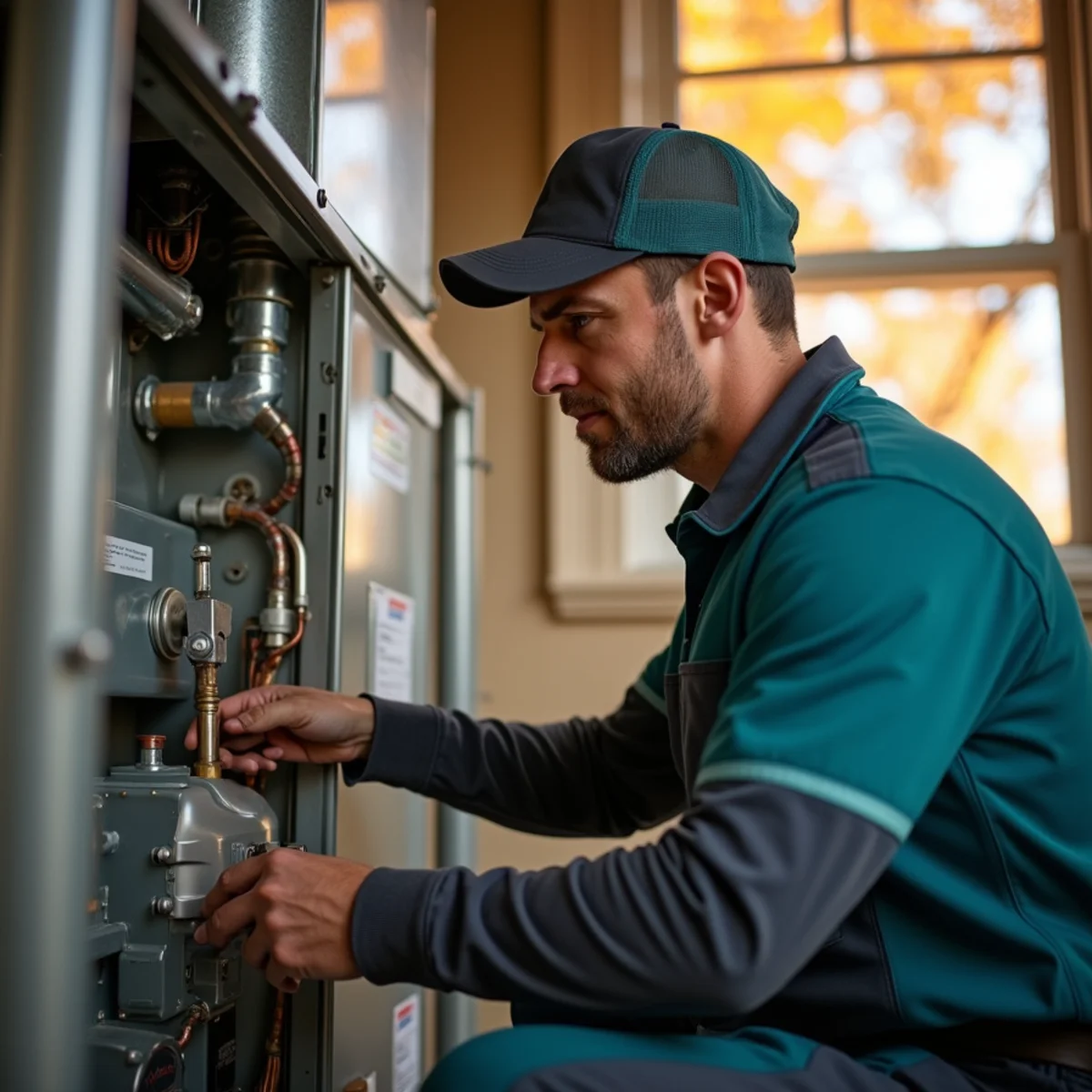
Before Somerset's first cold snap, run through this fall furnace checklist so your heat is ready, and safe, when you need it.
Why Fall Is the Time to Prep
A good fall furnace checklist has two halves: what you handle yourself, replace the filter, test the furnace early, clear the area, check CO detectors, open the vents, and what a pro handles, inspecting the heat exchanger, cleaning the burners and flame sensor, and verifying combustion and safety controls. Do both before the first hard freeze and you head off almost every winter no-heat call.
Fall is the sweet spot for this in Somerset. The weather is still mild, so you are not desperate for heat, and you have time to catch and fix problems before the cold sets in. Nothing is worse than discovering your furnace does not work on the coldest night of the year, when everyone else's is failing too and service is stretched thin.
A proper fall tune-up makes sure your furnace will actually run when you need it, and keeps it running efficiently and safely all winter. Some of the checklist you can knock out yourself; the rest is worth a professional's eyes.
What You Can Do Yourself
Before your first cold snap, there are several simple things any homeowner can knock out. These take a little time but head off the most common early-season problems.
Start with the basics and work through the list. If anything seems off, unusual noises, smells, or the furnace not firing, that is your cue to call a professional rather than push it.
- Replace the air filter, a fresh filter is the foundation of good airflow.
- Test the furnace early: run it before you need it to catch problems now.
- Clear space around the furnace and vents of stored boxes and clutter.
- Check and test your carbon monoxide and smoke detectors, replace batteries.
- Make sure supply and return vents throughout the house are open and unblocked.
- Set the thermostat to Heat and confirm it responds correctly.
What a Professional Tune-Up Covers
A DIY check handles the surface, but a professional tune-up goes deeper into the parts that keep your furnace safe and efficient. This is where an expert inspects components you should not, and cannot easily, check yourself, and where safety issues like a cracked heat exchanger get caught.
Our HVAC maintenance tune-up includes a thorough inspection and cleaning that keeps your furnace reliable through the season. Catching a worn part or a combustion issue in the fall is far cheaper and safer than a breakdown in January.
- Inspecting the heat exchanger for cracks that could leak carbon monoxide.
- Checking and cleaning burners and the flame sensor.
- Testing the ignition system and safety controls.
- Inspecting the blower motor and belts, lubricating as needed.
- Checking gas or propane connections and pressure.
- Verifying the system cycles and vents correctly.
The Parts That Cause Most No-Heat Calls
After enough Somerset winters, you learn which small parts cause most of the breakdowns, and almost all of them get caught in a fall tune-up. Knowing what they are helps you understand why the professional half of the checklist earns its keep.
The flame sensor is the number-one culprit. It is a thin metal rod that confirms the burner actually lit; when it gets coated with a fine oxide film over a summer of sitting idle, the furnace lights, runs a few seconds, then shuts off, and does it again and again. A quick cleaning during a tune-up prevents a frustrating night of no heat. Igniters, capacitors, and pressure switches are the other usual suspects, all cheap to replace in the fall and miserable to lose in January.
Short-Cycling Is a Warning, Not a Quirk
If your furnace fires up and shuts off in short bursts, do not ignore it. Short-cycling can come from a dirty flame sensor, a clogged filter choking airflow, an oversized furnace, or a failing limit switch, and running that way stresses the ignition and blower and drives up your propane use. Catch it in the fall and it is a cheap fix; leave it and it can leave you cold or damage the unit. If yours is already acting up, our furnace repair team can diagnose the cause before winter.
The Safety Angle You Can't Skip
A furnace tune-up is not only about comfort and efficiency, it is about safety. Gas and propane furnaces produce combustion gases, and a cracked heat exchanger or a venting problem can leak carbon monoxide into your home, an odorless, invisible danger. This is why the heat exchanger inspection and working CO detectors are non-negotiable parts of fall prep.
This matters even more for the many Somerset-area homes on propane, which burns hotter and stresses the heat exchanger over time. A technician inspects the exchanger for cracks, checks combustion, and confirms the flue vents properly to the outside. Regular professional maintenance is the best protection against a silent combustion hazard, and if you ever smell gas or your CO alarm sounds, leave and call for help, that is a no-heat emergency, not a wait-until-morning problem. We help homeowners across the region, including out toward Science Hill and throughout Pulaski County, stay safe and warm all winter.
Schedule Your Fall Tune-Up
Do not wait for the first freeze to find out your furnace has a problem. Call HVAC Somerset KY at +1 (327) 210-5999 to schedule a fall furnace tune-up while there is still time to fix anything we find. We are a local family business, and a little maintenance now means a warm, safe, and efficient winter, and no scrambling for emergency furnace repair on the coldest night of the year.
Quick Answers
Frequently Asked
Early to mid fall is ideal, before the first hard freeze. That gives you time to fix any problems while the weather is still mild and before service schedules fill up with cold-weather emergencies.
It is risky. Many serious problems, including a cracked heat exchanger that leaks carbon monoxide, are not obvious until they cause a breakdown or a safety issue. A tune-up catches them early and keeps you safe.
Yes, arguably even more so. Propane furnaces produce combustion gases and need their heat exchanger, burners, and venting checked for safety and efficiency. Many area homes run propane, call +1 (327) 210-5999.
That is classic short-cycling, and the most common cause is a dirty flame sensor that fails to confirm the burner lit. A clogged filter or failing limit switch can also do it. A fall tune-up cleans the sensor and checks the airflow before it leaves you without heat.
Cost depends on the system and what the inspection turns up, so we quote it directly rather than post a number that may not fit your furnace. Call +1 (327) 210-5999 for a straight answer. A tune-up is far cheaper than an emergency repair on the coldest night of the year.
Need a hand from a real Somerset tech?
Same-day service across Pulaski County — 24/7 emergency dispatch, nights, weekends & holidays.
Related Services
How We Can Help
Serving


