
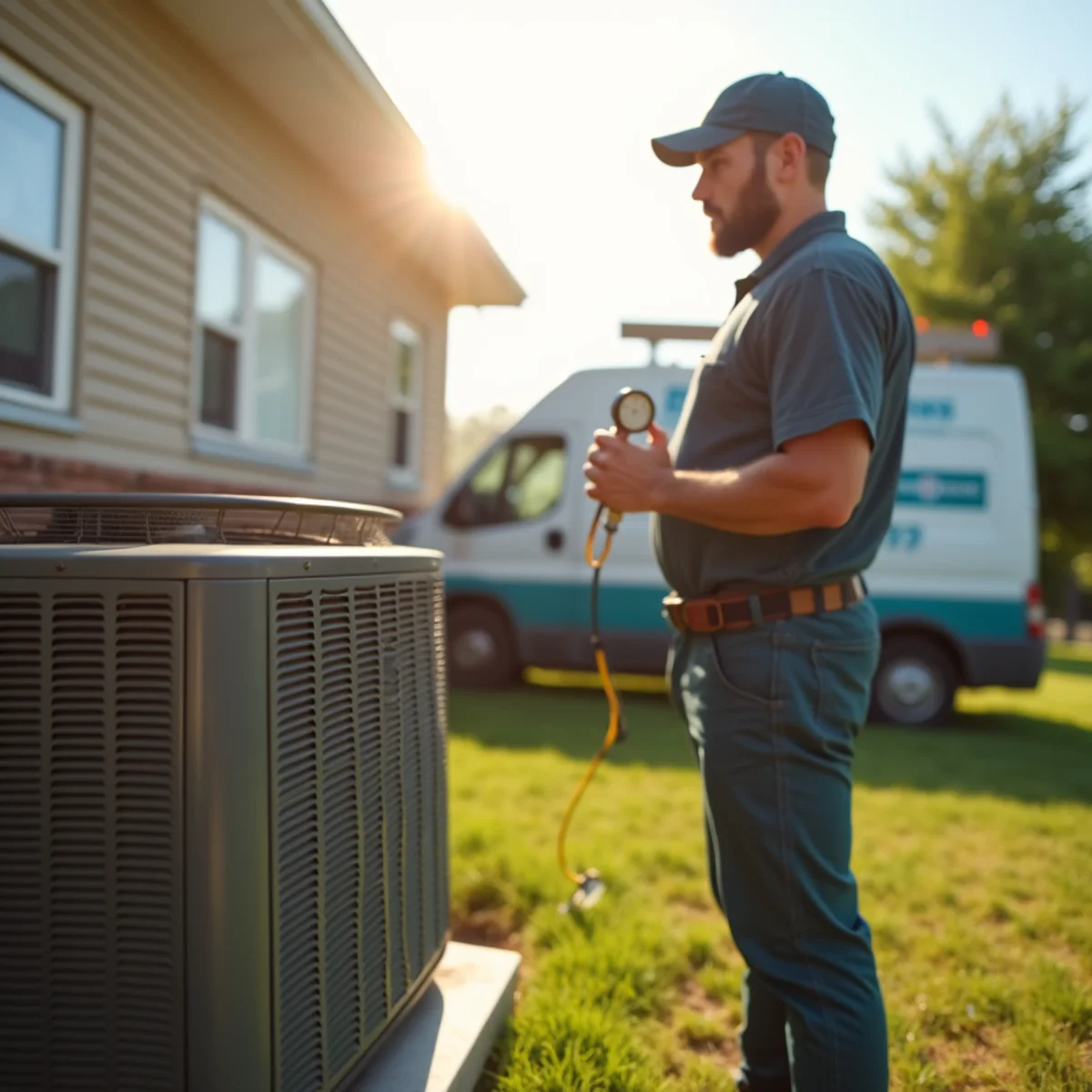
When your AC dies on a 90-degree Pulaski County afternoon, these steps keep your family cool and safe until help arrives.
Keep the Heat Out and Bodies Cool First
If your AC quits during a Pulaski County heat wave, act fast: set the thermostat to Cool and confirm it has power, replace a dirty air filter, check the breakers for both the indoor and outdoor units, and make sure the outdoor fan is spinning. Close blinds, run fans, and hydrate while you troubleshoot, then call for emergency repair if the system stays down.
Somerset summers regularly push into the upper 80s and beyond, and with Lake Cumberland humidity layered on top, indoor temperatures climb fast once the AC stops. Before you troubleshoot anything, slow the heat gain. Close blinds and curtains on the sunny side of the house, keep exterior doors shut, and run ceiling fans to move air across skin so sweat can do its job.
Watch the people most at risk. Infants, older adults, and anyone with heart or breathing conditions can slide into heat distress quickly. Push fluids, find the coolest room, and if anyone shows confusion, nausea, or stops sweating, treat it as a medical emergency and call 911.
- Block direct sun with blinds, curtains, or even cardboard on the hottest windows.
- Drink water steadily, even before you feel thirsty.
- Set up in the lowest, shadiest room, basements and ground floors stay cooler.
- Use damp cloths on the neck and wrists to shed heat fast.
Simple Checks That Solve Many No-Cool Calls
Not every dead AC needs a technician. A few quick checks resolve a real share of summer emergency calls, and they take five minutes. Start at the thermostat and work outward toward the equipment.
A clogged filter or a tripped breaker is a common culprit after the system has been running hard for days. So is a condensate drain that has backed up and tripped the safety float, which shuts the system down to prevent water damage.
- Set the thermostat to Cool and several degrees below room temperature; confirm it has power.
- Replace a dirty air filter, a clogged one can freeze the coil and stop cooling.
- Check the breaker for both the indoor and outdoor units.
- Look at the outdoor unit: is the fan spinning, or is it silent or humming?
Signs You Need Emergency Service Now
Some symptoms mean it is time to stop resetting things and call for help. A burning smell, ice on the refrigerant lines, water pooling around the indoor unit, or a breaker that trips the moment you reset it all point to problems that get worse, not better, with more run time. Our emergency AC repair team keeps homes across the county comfortable through the worst stretches of summer.
We cover all of Pulaski County and Somerset neighborhoods like Oak Hill, and during heat waves we prioritize households with vulnerable family members. The sooner you call, the sooner we can get your home back to a safe temperature.
Ride Out the Wait Without Making It Worse
If you have confirmed the coil is not frozen and the breaker holds, it is fine to let the system run while you wait. But if you saw ice on the lines, turn the AC off and switch the fan to On, that lets the coil thaw so a technician does not arrive to a solid block of ice that hides the real problem.
Meanwhile, keep cooking and laundry to a minimum. Every appliance that makes heat or steam works against you, and a July kitchen can add several degrees to a house that has already lost its cooling.
Why Somerset AC Systems Fail in Peak Heat
Air conditioners break down during heat waves for a reason: the equipment runs flat out for days, and any weak component finally gives out under the load. Around Pulaski County, Lake Cumberland humidity adds to the strain because the system is fighting both temperature and moisture at once.
The parts we replace most often in July tell the story. A run capacitor is a small cylinder that gives the compressor and fan motors the jolt they need to start; heat degrades it, and a bulged or weak capacitor is the number-one no-cool failure we see. A pitted contactor, a refrigerant charge that has slowly leaked down over the seasons, and a condenser coil packed with cottonwood and grass clippings round out the usual suspects.
- Failed run capacitor: the compressor hums but will not start on the hottest afternoons.
- Low R-410A charge from a slow leak: long run times, weak cooling, and sometimes ice on the lines.
- Dirty condenser coil: the outdoor unit cannot shed heat, so pressures and temperatures climb.
- Tripped condensate float switch: a backed-up drain shuts the system off to prevent water damage.
What a Technician Diagnoses on a No-Cool Call
A real diagnosis is more than swapping the obvious part. When we arrive, we meter the electrical components, check refrigerant pressures against the system's target, and measure the temperature split across the coil to confirm the unit is actually moving heat. That is how we tell a quick capacitor fix from a refrigerant leak that has to be found and sealed.
If the numbers point to low charge, we do not just top it off and leave, because refrigerant is not consumed, it leaks. Adding R-410A to a leaking system is a temporary patch that fails again in weeks. Our refrigerant leak repair finds the actual leak so you are not paying for the same recharge every summer, and routine HVAC maintenance catches most of these problems before a heat wave exposes them.
Call Us and We'll Get You Cool Again
You should not have to sweat out a dangerous afternoon hoping the AC fixes itself. Call HVAC Somerset KY at +1 (327) 210-5999 and we will walk you through the safe next step or get a technician rolling. We are local, we know how brutal a humid Pulaski County heat wave can be, and we treat a hot house with young kids or elderly parents as the emergency it is. Save our number now so it is ready when the temperature spikes.
Quick Answers
Frequently Asked
Ironically, hard summer use plus a dirty filter or low refrigerant can drop the coil below freezing and ice it over. Turn the system off, run the fan to thaw it, replace the filter, and if it refreezes, call us to check the charge.
No. A breaker that trips repeatedly is protecting your home from an electrical fault, often a failing compressor or capacitor. Leave it off and call +1 (327) 210-5999 for a diagnosis.
Block the sun, run fans, hydrate, avoid using the oven, and gather in the coolest ground-floor room. If anyone shows signs of heat illness, call 911 first.
That hum with a still fan usually means a failed run capacitor, the most common heat-wave breakdown we see. Shut the system off so the compressor does not overheat, then call +1 (327) 210-5999. It is an inexpensive, fast fix once a technician confirms it with a meter.
For most healthy adults, a few hours with fans, shade, and fluids is manageable. But for infants, older adults, or anyone with heart or breathing conditions, a hot house turns dangerous fast. Tell us who is home when you call so we can prioritize your visit correctly.
Need a hand from a real Somerset tech?
Same-day service across Pulaski County — 24/7 emergency dispatch, nights, weekends & holidays.
Related Services
How We Can Help
Serving


