
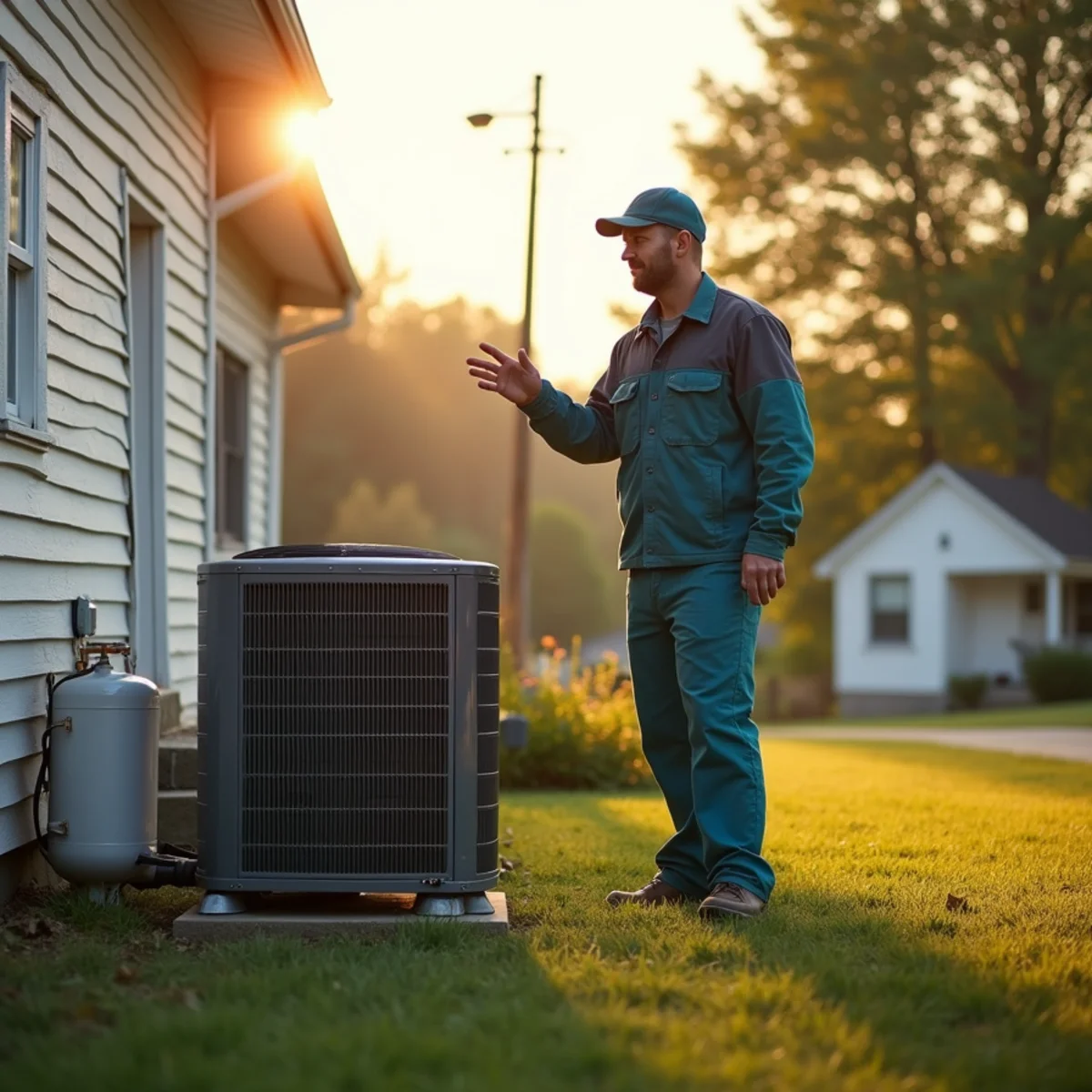
Rural Pulaski County homes off natural gas face a choice: straight propane or a dual-fuel heat pump. Here's how to decide.
The Off-Grid Heating Question
For most off-grid Pulaski County homes, a dual-fuel system costs less to run over a winter than straight propane, because an efficient heat pump handles the mild majority of the season and propane fires only on the coldest nights. Straight propane wins on lower up-front cost and simplicity. The right pick depends on your budget and heating load.
A huge share of rural Pulaski County sits off the natural gas grid, which puts homeowners here in front of a choice their in-town neighbors do not face. When natural gas is not an option, the two most common paths are a straight propane furnace or a dual-fuel system, a heat pump paired with a propane furnace backup. Both heat your home well, but they cost very different amounts to run.
Getting this decision right matters, because heating is one of your biggest seasonal expenses in a Kentucky winter. Let us break down how each works and which tends to make sense for different homes.
How Straight Propane Heating Works
A propane furnace burns propane to produce heat, simple, reliable, and it puts out very warm air even on the coldest nights. For homes that already have a propane tank and furnace, it is familiar and dependable. The downside is operating cost: propane prices swing with the market, and a long, cold winter can burn through a lot of it, making propane one of the pricier ways to heat.
Straight propane makes sense for some homes, those with lower heating needs, budget constraints on up-front cost, or situations where a heat pump is not practical. But for many homes, running propane all winter is expensive when there is a more efficient option.
How Dual-Fuel Systems Save Money
A dual-fuel system is the clever middle path. It pairs an efficient heat pump with a propane furnace. For most of the Kentucky winter, when temperatures are mild-to-moderate, the heat pump does the work very efficiently and cheaply. Only when it gets truly cold, below the point where the heat pump is economical, does the system automatically switch to the propane furnace.
The result is that you burn far less propane, using it only on the coldest nights, while the efficient heat pump handles the bulk of the season. Over a winter, that can add up to significant savings compared to straight propane. Our propane and dual-fuel heating installations are popular across the off-grid parts of the county for exactly this reason.
- Heat pump handles mild-to-moderate weather efficiently and cheaply.
- Propane furnace kicks in automatically only on the coldest nights.
- Far less propane burned over a full winter.
- The heat pump also provides efficient air conditioning in summer.
- Higher up-front cost, offset by lower operating cost over time.
Which Is Right for Your Home
The best choice depends on your situation. If you want the lowest up-front cost and have modest heating needs, straight propane may fit. If you want to cut your winter fuel bills and you also want efficient air conditioning in one system, dual-fuel usually wins over the long run, even though it costs more to install.
It also depends on your home and ductwork. We help homeowners across the rural county, from Dykes to Tateville, run the numbers on both options, factoring in current propane prices, any available heat pump rebates, and a proper load calculation for your home.
The Balance Point: Where Dual-Fuel Earns Its Keep
The number that makes dual-fuel work is called the balance point, the outdoor temperature at which running the heat pump stops being cheaper than firing the propane furnace. We set that switchover temperature in the thermostat based on your equipment and local propane price. Above it, the heat pump carries the load efficiently; below it, the system hands off to propane automatically. You never touch a switch.
This is also where the efficiency numbers matter. A propane furnace is rated by AFUE, the percentage of fuel it turns into heat, so a 95 percent AFUE furnace wastes only a nickel of every fuel dollar up the flue. A heat pump is rated by HSPF for heating and SEER2 for cooling, and because it moves heat rather than burning fuel, it can deliver several units of heat per unit of electricity in mild weather. Getting the balance point right is what captures the savings on paper in your actual monthly bills.
- Balance point: the outdoor temperature where propane becomes cheaper than the heat pump.
- AFUE rates the propane furnace; higher means less fuel wasted.
- HSPF and SEER2 rate the heat pump's heating and cooling efficiency.
- The thermostat handles the switchover automatically, no manual toggling.
- We tune the switchover temperature to current propane prices for your home.
Rebates, Sizing, and the Long View
Up-front cost is where straight propane looks tempting, but the picture changes once you factor in rebates and the years you will run the system. High-efficiency heat pumps sometimes qualify for utility incentives, and South Kentucky RECC has historically offered rebate programs on qualifying heat pump equipment, worth asking about before you buy, since programs and amounts change year to year.
Whichever route you choose, correct sizing decides whether you are happy with it. We run an ACCA Manual J load calculation rather than replacing whatever was there before, then match the equipment with Manual S. An oversized propane furnace short-cycles and wastes fuel; an undersized heat pump leans on backup too early and erases its savings. Our heat pump services and seasonal HVAC maintenance keep a dual-fuel system tuned so both stages run when they should.
Let's Run the Numbers for Your Home
Off-grid heating is a real decision with real money on the line, and the right answer depends on your home, your budget, and how you weigh up-front cost against monthly savings. Call HVAC Somerset KY at +1 (327) 210-5999 for an honest comparison of dual-fuel and straight propane for your specific situation. We are a local family business that heats a lot of rural Pulaski County homes, and we will help you choose the system that keeps you warm without overpaying all winter.
Quick Answers
Frequently Asked
For most homes, yes, over the winter. The heat pump handles the bulk of the season efficiently, and propane runs only on the coldest nights, cutting fuel use substantially. The trade-off is a higher up-front cost.
On its own, a heat pump loses efficiency in extreme cold, which is exactly why dual-fuel exists. The propane furnace automatically takes over on the coldest nights, so you are always comfortable.
Often the heat pump is added to work with your furnace, but the specifics depend on your existing equipment and ductwork. We assess your setup and give you honest options, call +1 (327) 210-5999.
It is the outdoor temperature at which running propane becomes cheaper than running the heat pump. We program that switchover into your thermostat, so the heat pump handles mild weather and propane takes the coldest nights automatically. Setting it correctly is what delivers the promised savings.
Sometimes. South Kentucky RECC has offered rebate programs on qualifying high-efficiency heat pumps, and federal incentives come and go. Amounts and eligibility change year to year, so ask us or your utility before you buy. Call +1 (327) 210-5999 and we will point you to what is current.
Need a hand from a real Somerset tech?
Same-day service across Pulaski County — 24/7 emergency dispatch, nights, weekends & holidays.
Related Services
How We Can Help
Serving


