
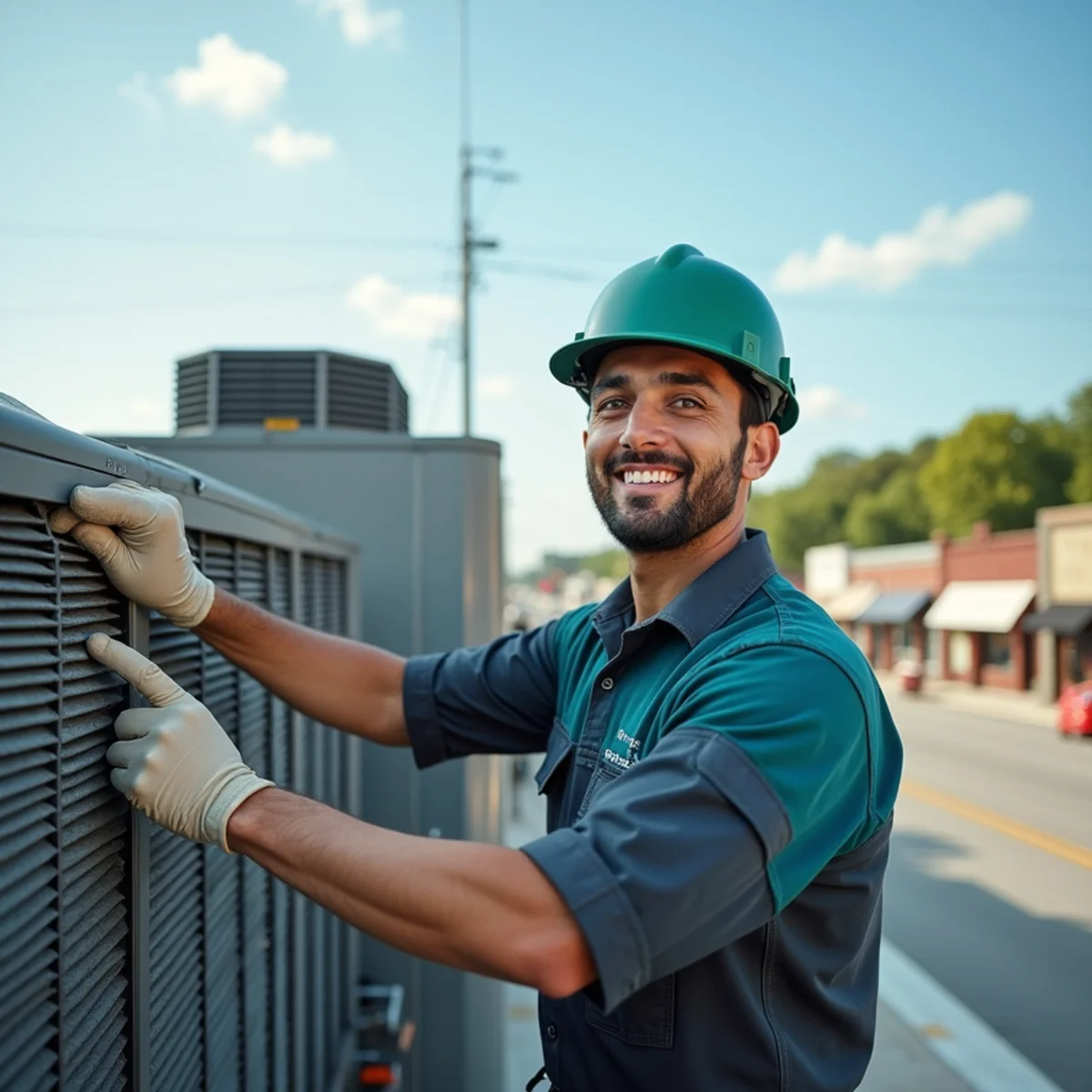
Rooftop units keep US-27 retail comfortable. Here's what Somerset business owners should know about commercial HVAC basics and maintenance.
The Workhorses on Your Roof
Most retail, restaurant, and office space on Somerset's US-27 corridor is heated and cooled by rooftop units, or RTUs, packaged systems that combine heating and cooling in one weatherproof cabinet on the roof. For an owner, the three things that matter are keeping them on a maintenance schedule, sizing them to the real heat load rather than square footage, and planning replacement before a unit dies mid-summer. Get those right and RTUs are reliable, quiet, and out of your customers' way.
Drive the corridor and look up and you will see them everywhere. Putting the equipment on the roof saves valuable floor space and keeps the noise off the sales floor. If you own or manage a commercial property here, RTUs are probably your workhorses.
Understanding the basics helps you keep your business comfortable, control your costs, and avoid the kind of breakdown that empties your store on a hot Saturday. Here is what every business owner on the corridor should know.
How Commercial RTUs Differ From Home Systems
Commercial HVAC is not just a bigger version of what is in your house. RTUs are packaged units built for heavier, longer duty cycles and larger spaces. They handle bigger loads from foot traffic, lighting, kitchen equipment, and the constant opening of doors. Many businesses run multiple RTUs, each serving a zone of the building.
Because they sit on the roof exposed to sun, wind, hail, and our heavy rain year-round, they take a beating. And because a failure directly affects your customers and revenue, uptime matters in a way it does not for a home. Our commercial HVAC service is built around keeping businesses running.
Why Maintenance Is a Business Decision
For a business, HVAC maintenance is not just upkeep, it is protecting revenue and customer experience. A comfortable store keeps customers browsing and staff productive; an uncomfortable one drives people out the door. And an RTU that fails during peak season or peak hours means lost sales on top of an emergency repair bill.
Regular commercial maintenance catches problems before they cause downtime, keeps energy costs, often a major line item for a business, under control, and extends the life of expensive equipment. Given how hard RTUs work and how exposed they are, a proactive maintenance schedule almost always costs less than reactive breakdowns.
- Prevents costly downtime during business hours and peak season.
- Keeps customers and employees comfortable and productive.
- Controls energy costs, a significant commercial expense.
- Extends the life of expensive rooftop equipment.
- Catches roof-exposed weather and storm damage early.
What Rooftop Maintenance Actually Involves
Commercial RTU maintenance is not the same checklist as a home system, and knowing what it covers helps you judge whether you are getting real service. Because RTUs sit exposed on the roof and run long duty cycles, a few components need attention that residential equipment does not.
Belts and bearings are a big one. Many RTUs drive the blower with a belt that stretches, cracks, and eventually snaps, taking your airflow with it, so it gets inspected and tensioned or replaced on a schedule. The economizer, a set of dampers that pulls in cool outside air when conditions allow, saves real money when it works and quietly wastes it when the linkage seizes, which happens often because owners never look at it. And the rooftop curb and cabinet get checked for the water intrusion our heavy rain causes.
- Inspecting and tensioning or replacing blower belts before they snap.
- Checking and freeing the economizer dampers so free cooling actually works.
- Cleaning condenser and evaporator coils that bake and clog in rooftop dust.
- Verifying the curb, seams, and cabinet are sealed against rain intrusion.
- Testing the heating side and controls so both seasons are covered in one visit.
- Setting a filter schedule sized to the unit's duty, often monthly in heavy-traffic retail.
Planning for Comfort and Efficiency
Smart commercial owners think ahead. Proper equipment sizing matters even more when a business's heat load includes lighting, equipment, and crowds, an ACCA Manual J and commercial load calculation makes sure your RTUs are matched to the space. Energy efficiency, through modern SEER2-rated equipment and good maintenance, directly affects your operating costs.
Aging equipment is worth planning around rather than reacting to. An RTU limping through its final summers costs you in energy and surprise repairs, and replacing it on your schedule, in the shoulder season, beats an emergency swap during your busiest week. A maintenance agreement keeps the units running and gives you honest lead time on which ones are near the end. We serve businesses along the South US-27 corridor, in downtown Somerset, and throughout the commercial district, keeping their systems reliable and efficient.
Keep Your Business Comfortable
Do not let a rooftop unit failure cost you customers and sales. Call HVAC Somerset KY at +1 (327) 210-5999 to set up commercial HVAC service or maintenance for your US-27 corridor business. We are a local family business that understands what is at stake when your HVAC goes down during business hours, and we will keep your space comfortable, your energy costs in check, and your doors open.
Quick Answers
Frequently Asked
A rooftop unit (RTU) is a packaged HVAC system that houses heating and cooling in one cabinet on the roof. Businesses favor them because they save floor space, keep noise off the sales floor, and are built for heavy commercial use.
Commercial RTUs work hard and are weather-exposed, so more frequent maintenance than a home system is wise, often quarterly or seasonally depending on use. Regular service prevents downtime and controls energy costs. Call +1 (327) 210-5999.
Yes. Many corridor businesses run several RTUs across zones, and we service and maintain multi-unit setups. We will set up a schedule that keeps all your equipment reliable and your space comfortable.
Well-maintained RTUs commonly run 15 to 20 years, but heavy duty cycles and rooftop weather exposure shorten that when maintenance is skipped. Planning replacement in the shoulder season, before a unit fails during your peak week, is far cheaper and less disruptive than an emergency swap.
An economizer is a set of dampers that pulls in cool outside air when conditions allow, so the compressor runs less. It saves real money on mild days, but if the linkage seizes, which is common when nobody inspects it, it quietly wastes energy. Checking it is part of good RTU maintenance.
Need a hand from a real Somerset tech?
Same-day service across Pulaski County — 24/7 emergency dispatch, nights, weekends & holidays.
Related Services
How We Can Help
Serving


